 Milli Modificomillimod.com
The 964,
to RSR Specification.
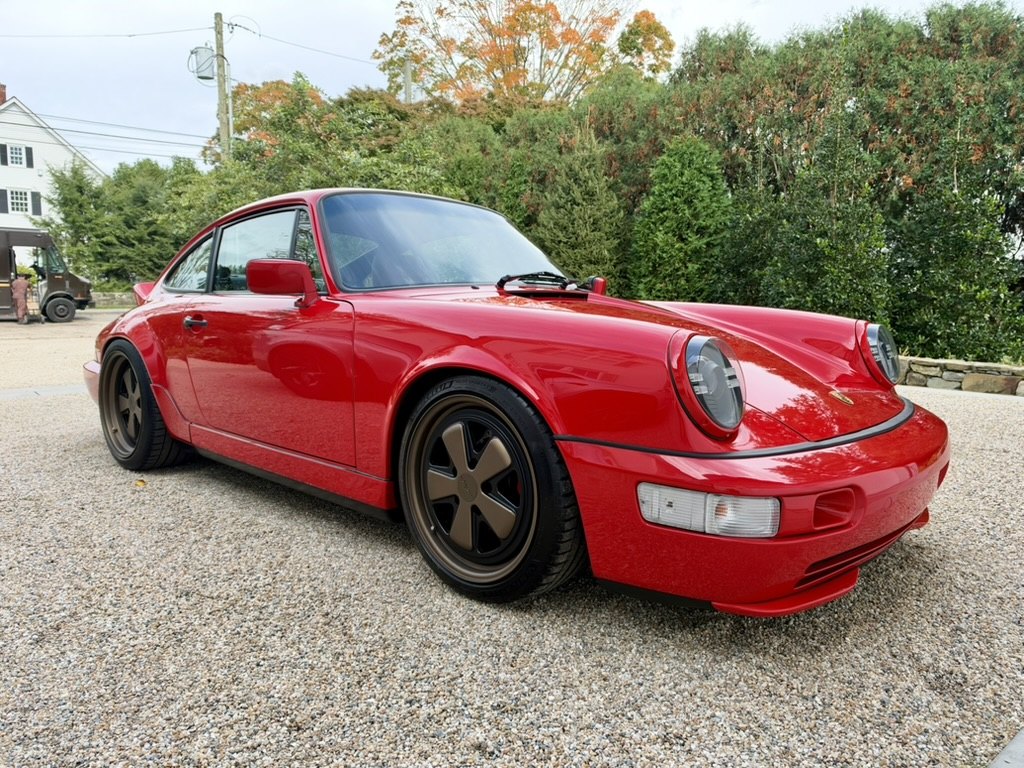
1991 964 C2, Guards Red over brown leather, 88,991 miles. Foremost Speed Shop in Atlanta was commissioned to build the car beginning in October 2022, and the work ran through August 2025. The engine is a 3.8 L M64 built around a Rothsport Racing 993 RSR-style top end, with ITBs under a GT3 plenum and MoTeC controlling electronic spark and fueling, an M&M Germany exhaust, and 298 whp on a Dynojet.
Contents
| Chapter | Focus |
|---|---|
| 01 · The Builders | Foremost · Rothsport · Wrightwood |
| 02 · The Motor | 3.8 RSR Flow Package · Bottom End · Heads · Cams |
| 03 · Induction & Management | Rothsport Big-Bore ITBs · MoTeC M800 |
| 04 · The Exhaust | M&M 964C Power Kit |
| 05 · Driveline & Chassis | G50 · Wavetrac · Brembo GT · Rotiform |
| 06 · Body, Lighting & HVAC | Carbon · RS Aero · Lighting · Classic Retrofit |
| 07 · Interior | Stuttgart Classica · Relicate · Recaro · JL Audio |
| 08 · From Here: Refining the Package | Repasi · Bill T Industries · Interior · Detail |
The Builders
Foremost Speed Shop and the sourcing decisions

Foremost Speed Shop is an independent Porsche shop in Buckhead, Atlanta. It works on both air-cooled and water-cooled flat sixes: full rebuilds and in-house custom engine builds. It is the shop regularly recommended in the Rennlist and Pelican Parts threads on independent Porsche shops in Atlanta, and warrants all work for 24 months or 24,000 miles.
Rothsport supplied the top end as a developed system: the cylinder heads, machined in its own shop to its RS-valve specification, 993 RS cams, the big-bore ITB kit with plenum, fuel rails, injection and coil packs, the MoTeC ECU and harness, and the requirement that the M&M exhaust be used so the package ran on the exhaust it was modeled against. Wrightwood Racing supplied the bottom-end hard parts to fit that package and the factory rods: the Mahle pistons and cylinders in the wide-pin-boss slip-in configuration, the gasket set, and the case materials. The calibration was likewise sublet to EMS, an expert in air-cooled dynamometer tuning.
The engine made 298 whp on the Dynojet, nearly 350 hp at the crank, with a street idle. The specifications a future shop will need are held by Rothsport, Wrightwood and EMS.
Rothsport Racing

Rothsport Racing is Jeff Gamroth's shop in Sherwood, Oregon, founded in 1998 after a decade of road racing Porsches in SCCA, IMSA and PCA competition, including the Daytona 24 Hours and Sebring 12 Hours. Gamroth has developed individual-throttle intake systems for the flat six for more than twenty years, and the shop's ITB-and-MoTeC packages are widely used on air-cooled engines that need to start and idle as road cars.
Rothsport's intake development began with stable idle, clean cold start and a usable manifold-pressure signal on a street 911; the shop's Baja-raced 964s ran the package under heat, dust and vibration. The big-bore kit on this engine is the current version of that work: Jenvey-derived throttle bodies under a GT3-style plenum with a cone filter, Rothsport fuel rails and injection, coil-pack ignition and a MoTeC ECU, developed together. Rothsport supplies the kit only after a consultation, as part of a full flow package in which the heads, cams, throttle bores, injectors and exhaust are specified together for the engine it will go on.
Wrightwood Racing

Charlie Spira of Wrightwood Racing polished the crankshaft and supplied the engine's hard parts as one sourcing effort: the case materials and gasket set, the Mahle pistons and cylinders, and the Rothsport big-bore top end. Wrightwood is a small California firm best known among 911 engine builders for custom-assembled Porsche gasket sets and as the sole source for certain OE-spec seals, and it works by phone and COD. Given the plan (factory rods, slip-in 107 mm barrels, a Rothsport-specified head and induction package), the parts were selected to fit together.
The Motor
The engine follows the factory's 3.8 RSR specification, adapted for street use. In that specification the power gain comes from removing each restriction in the airflow path in turn. A stock 964 is 247 hp at the crank and roughly 205–210 at the wheels. This one made 298 at the wheels, which at a typical 13–15% driveline loss is 340–350 crank hp, between a 3.8 Cup car (325 PS) and a 993 RSR 3.8 (350 PS). The factory got there with 102 mm bores, larger valves and ports, RSR cams, individual throttles and a free exhaust; Rothsport's package reproduces each of those steps in a form that idles, starts cold and runs a 24-month warranty.
| Type M64/01 — as delivered, 1991 | |
|---|---|
| Displacement | 3,600 cc · 100 × 76.4 mm |
| Induction | Single 64 mm throttle · flap AFM · Motronic |
| Valves / ports | 49 / 42.5 mm · 41.5 / 38 mm |
| Cams | 236° / 226° at 1 mm · 11.8 / 10.8 mm lift |
| Exhaust | Heat exchangers · one catalyst · two mufflers |
| Output | 247 hp · ≈205–210 whp |
Changing one element alone yields little; larger valves without an exhaust, or an exhaust without cams, move the restriction to the next item in the path. What the package does, in order of airflow:
- The M&M header-and-muffler system, which meets Rothsport's required exhaust specification, replaces the heat exchangers with long-tube, equal-length primaries into a 2.5" motorsport collector, removes the catalyst and the second muffler. On an air-cooled flat six this is the single largest restriction; M&M claims 25 hp and 23–35 lb-ft from the system alone on an otherwise stock 964.
- The RSR-style valve job raises the head's flow ceiling. Larger Euro/RS-pattern valves on 8 mm stems, new guides and seats, and blended ports lift peak flow and shift it higher in the lift curve, so the port continues to flow at the lift the cam provides.
- The 993 RS cams add lift and duration. With the exhaust's scavenging and the head's flow in place, extra overlap pulls charge through the cylinder.
- The ITB kit gives each cylinder its own throttle under a GT3-type plenum. That deletes the AFM and the long plenum runners, gives sharp throttle response and strong intake pulse tuning, and because the plenum sits upstream of the throttles it still provides a filtered air source and a usable manifold-pressure signal.
- The 3.8 kit (102 mm Mahle RSR pistons and cylinders) raises displacement 5.5% and compression to roughly 11.3–11.5:1.
- MoTeC with a full sensor set (crank trigger, CHT, oil pressure and temperature, lambda) provides per-cylinder fuel and ignition trim, a cold-start and idle strategy for six independent throttles, and knock-safe timing on an 11:1+ air-cooled engine.
The 964 3.8 RS/RSR and the 993 3.8 RSR were homologation and customer-race engines whose cylinder heads carried 51.5/43.5 mm valves on 46/42 mm ports, fully threaded head studs, and individual slide or butterfly throttles. An RSR flow package is the head, cam, induction and exhaust specification designed around the 102 mm pistons. This engine carries each element of that specification: fully threaded 993 RS-type head studs (993 101 170 54), cylinder heads machined for Euro valves, 993 RS camshafts, the Rothsport ITB kit, and the M&M exhaust.
The street-use choices are butterfly ITBs under a plenum (filtration, MAP signal, cabin-friendly induction noise), a 993 fuel-pressure regulator with Bosch EV-type injectors, and a Dynojet calibration targeting a flat torque curve to a street redline.
Bottom end
The case was split for the bottom-end reseal and bearing replacement; the cylinder spigots were left at factory size. The piston and cylinder set is a Mahle 3.6-to-3.8 "RSR" slip-in kit — 102 mm Nikasil cylinders in 107 mm sleeves on the stock 76.4 mm stroke, 3,746 cc — which fits the factory case bore without boring. Charlie at Wrightwood Racing supplied it in the wide-rod-eye configuration, with the wrist-pin size selected for the factory 964 connecting rods, so the crank and rods were retained. The installing shop considered the 109 mm machine-fit kit, which requires boring the case spigots, and chose the slip-in version on a risk and scope basis. The crank went to Wrightwood for polishing. Bearings are new throughout.
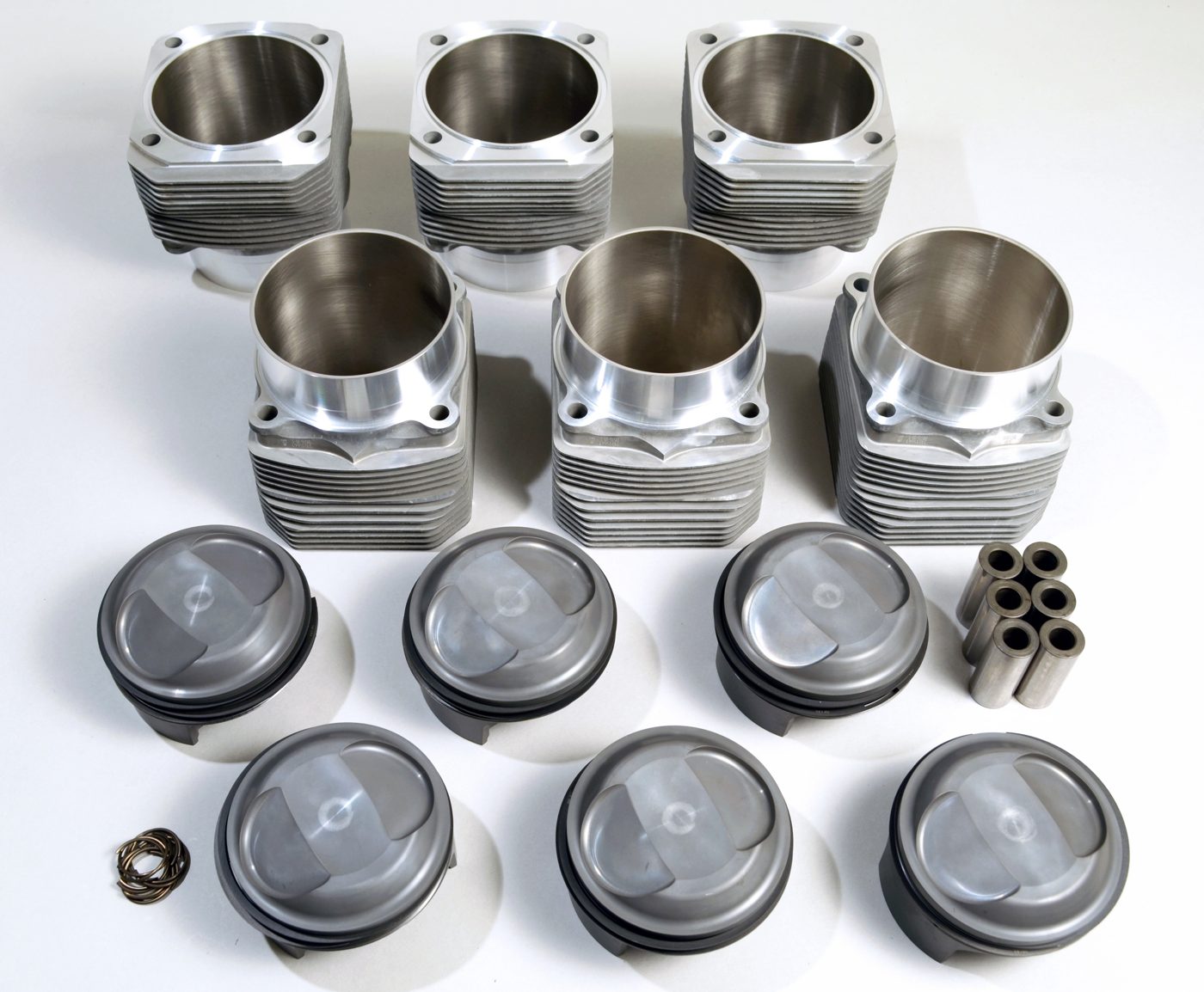
The set is the wide-pin-boss version of the Mahle kit. Mahle makes the 102 mm RSR piston in two pin-boss widths; the narrow-eye version needs 993/RSR-width rods, and a stock 964 rod will not clear it. Wrightwood supplied the wide-eye piston specifically so the factory rods could be retained without machining.
On a 964 at 11:1+ compression the factory's lower steel studs are the known failure point; the RS stud is the GT3-pattern replacement. Case through-studs were replaced at the same time.
Rod, main, nose, intermediate-shaft and thrust bearings all new. Curved chain rail, chain cover seals and tensioner-side hardware for a full reseal. New oil line, hoses, catch can and filter; Penngrade 20W-50.
Cylinder heads — the 993 RSR-style valve job
The heads were sent to Rothsport, which machined them for Euro valves; they were assembled with a new head gasket set. This is the 993 RS/RSR head specification applied to the 964 castings, which never changed and accept it directly.
| Spec | Stock 964 | 993 VarioRam | 993 RS / RSR | This engine |
|---|---|---|---|---|
| Intake valve | 49 mm · 9 mm stem | 50 mm · 8 mm | 51.5 mm · 8 mm | Euro valves, RS-pattern |
| Exhaust valve | 42.5 mm · 9 mm | 43.5 mm · 8 mm | 43.5 mm · 8 mm | RS-pattern |
| Ports | 41.5 / 38 mm | 43 / 39 mm | 46 / 42 mm | Blended and matched |
| Guides | 9 mm | 8 mm | 8 mm | New 8 mm guides |
| Seats | Stock | Stock | Larger RS | New seats for larger valves |
| Head studs | Steel lower / Dilavar upper | Dilavar | Fully threaded | Fully threaded 993 101 170 54 |
Every 993-pattern valve has a thinner stem than the 964's, so all 24 guides come out and 8 mm guides go in, honed to fit. A larger intake valve needs a larger seat, so the intake seats are replaced (heads heated to around 200 °C for the install), then cut to the factory three-angle spec with a narrow seat width. The step the bigger seat leaves below it is blended into the port, the guide boss is knife-edged, and the castings' flashing and porosity are smoothed. Done well this adds roughly 10 hp on its own and raises the lift at which the port continues to flow, which the higher-lift cam requires.
Camshafts
The cams are the 993 RS grind, installed with new flange gaskets, O-rings and Woodruff keys. On a 964 the M64 runs solid lifters and adjustable rockers, so a cam change is a direct swap with a valve-lash set. The RS profile was Porsche's road-legal performance cam for the 993 Carrera RS (3.8 L, 300 PS), one step below the Cup and RSR race grinds; it is ground on 964-compatible blanks for this application.
| Cam | Lift in / ex (mm) | Duration in / ex (° at 1 mm) | Character |
|---|---|---|---|
| Stock 964 | 11.8 / 10.8 | 236 / 226 | Factory 247 hp |
| Web Cam 20/21 | 12.3 / 11.5 | 238 / 226 | Mild, idle-friendly |
| Elgin C2 Sport | 12.5 / 11.6 | 247 / 230 | Street-plus |
| 993 RS | ~12.5–13 / ~11.5–12 | ~250–260 / ~235–245 | This engine |
| 964/993 RSR race (FVD 4.60 / 5.80 mm) | 13+ | 270+ | Race only, open throttles, 8,000+ rpm |
The RS grind suits the rest of the package: enough lift and duration to use the larger valves and the 2.5" exhaust, with a street idle and torque below 4,000 rpm.
Induction & Management
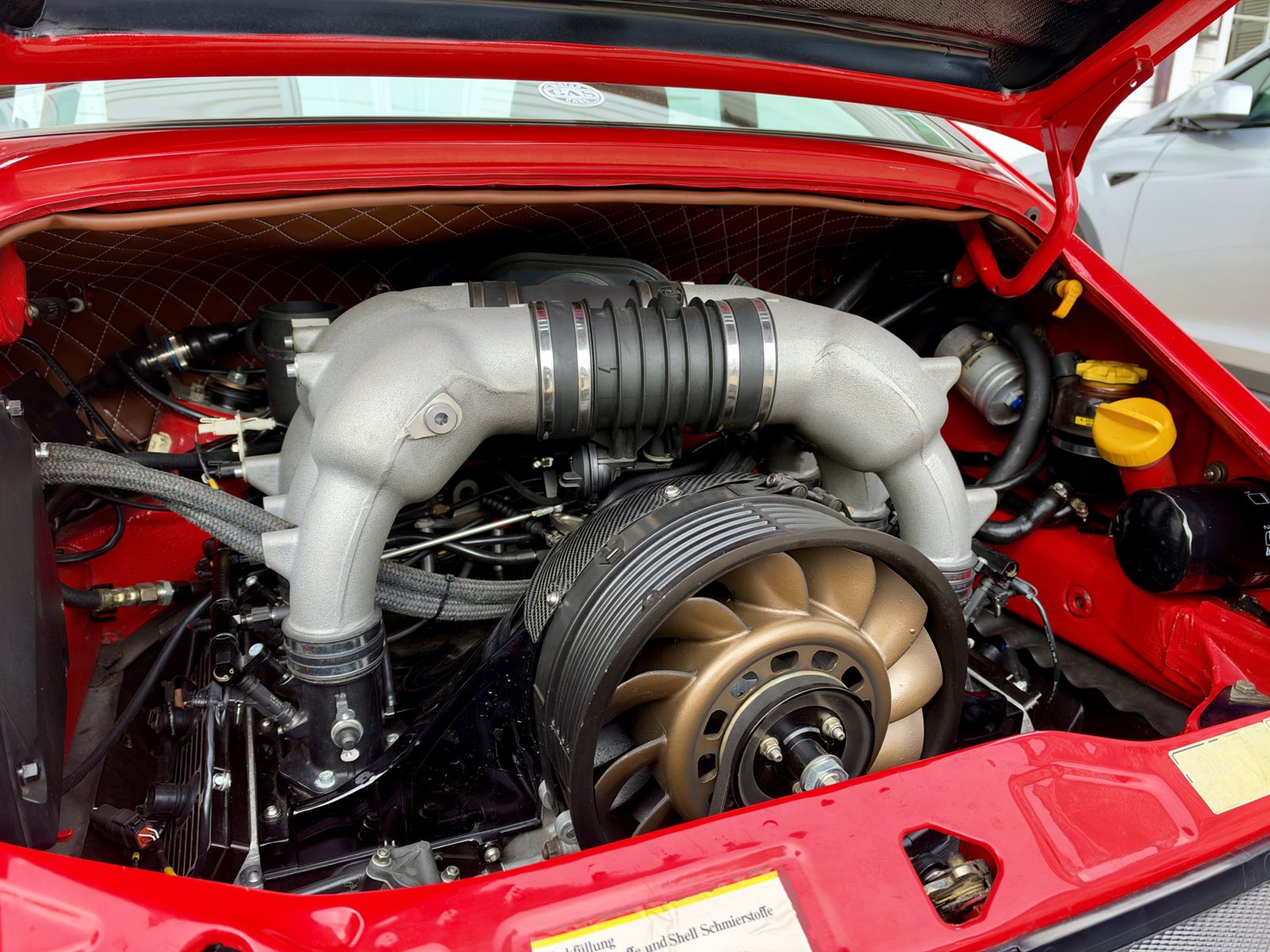
The induction and management are the Rothsport big-bore ITB kit: six Jenvey-derived individual throttle bodies, a GT3-style plenum with a cone filter, Rothsport fuel rails and injection, Rothsport coil packs for ignition, the MoTeC ECU, chassis and engine wiring harness, sensors, distribution plug, TPS and pressure transducers. A Bosch high-flow fuel pump was added separately. The induction half of the package addresses the 964's largest intake restriction, the single throttle and air-flow meter.
How the kit is laid out on this car: two sand-cast aluminum GT3-pattern plenums, one per bank, each with three short runners down to the heads, joined across the top by a center resonance tube with a corrugated coupling at each end. The inlet feeds the center section from a single filtered source. Beneath the plenums sit six Jenvey big-bore individual throttle bodies — the throttle linkage rods are visible crossing under the castings — with fuel rails and Bosch EV-type injectors in the runner flanges and an OEM 993-pattern fuel-pressure regulator on the linkage pivot. The factory AFM, throttle body, plenum and long runners are gone.
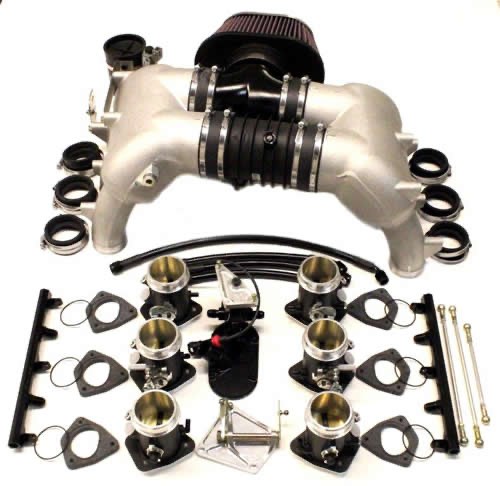
Each cylinder gets its own throttle plate a few inches from the valve, so throttle response is immediate and there is no shared-plenum lag. Short, equal trumpets are tuned for mid-to-high rpm fill; the plenum above them is a sealed airbox, which provides filtration and a consistent inlet. The plenum gives MoTeC a real manifold pressure signal, which lets six independent throttles idle cleanly, start cold and hold a stable part-throttle mixture.
Rothsport's linkage and regulator placement keep the fuel system OEM-pattern (993 regulator, EV-series injectors), so service parts are ordinary. The high-flow Bosch pump and the 93-octane calibration cover the fuel demand of ~350 crank hp with margin.
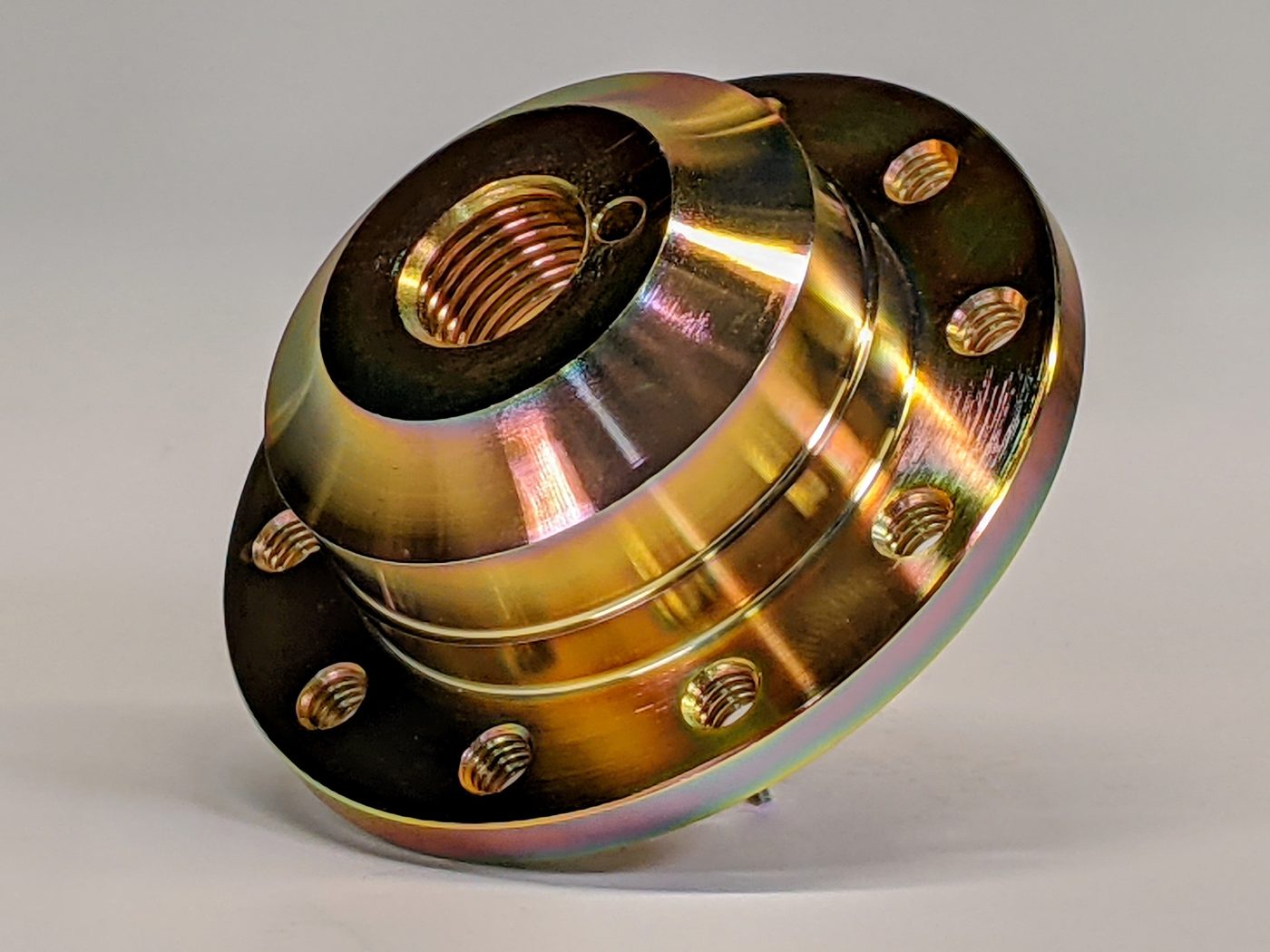
The engine runs a MoTeC M800 on a Rothsport chassis-and-engine harness, with coil-per-cylinder ignition replacing the distributor and new sensors throughout: a crankshaft sensor (996 606 105), a cylinder-head temperature sensor (993 606 013), an oil-pressure sender (928 606 203) and an oil-temperature sensor (911 606 112), plus throttle position and pressure transducers in the kit. The Rothsport pulley hub conversion carries the crank trigger that the M800 needs in place of the Motronic's flywheel pickup. An oxygen-sensor bung was welded into the M&M system for wideband lambda. The M800 is MoTeC's long-running full-feature ECU: sequential fuel and ignition for six cylinders, individual-cylinder trims, closed-loop lambda, and the logging and protection strategies (CHT- and oil-based limits, knock-safe timing tables) that an 11:1 air-cooled engine on ITBs benefits from. It is a mature platform with wide tuner familiarity.
The calibration was sublet to EMS, producing the Dynojet sheet in the records at 298 whp. On a Dynojet with a typical 13–15% loss for a G50 car that is about 340–350 hp at the crank, and the oil was changed immediately after the tune, which is the normal sequence for a fresh engine's break-in and full-load mapping.
| Dynojet — EMS, Atlanta | |
|---|---|
| Wheel horsepower | 298 whp |
| Implied crank (13–15% loss) | 340–350 hp |
| Fuel | 93 octane |
| Reference | 964 C2 247 hp · 3.8 Cup 325 PS · 993 RSR 3.8 350 PS |
The Exhaust

The exhaust is M&M part 64C012-3, the 964C Power Kit in dual-exit form, imported from Germany and fitted with an O2 bung. Rothsport specified this system as a condition of the flow package: the head, cam and induction work is modeled against a known exhaust, and the M&M header length, primary diameter and collector are the ones the package was developed on. M&M Exhaust GmbH, of Annaberg-Buchholz in Saxony, is the fabricator behind the race exhausts run by Porsche customer teams — Manthey, Black Falcon, Farnbacher, Konrad, Frikadelli, Kremer among them — and its 993 RSR and GT3 Cup systems are what the FVD Brombacher catalog sells under its own name for the 964, 993 and 997 Cup cars. Street systems are handmade to order, built from German 1.4301 stainless.
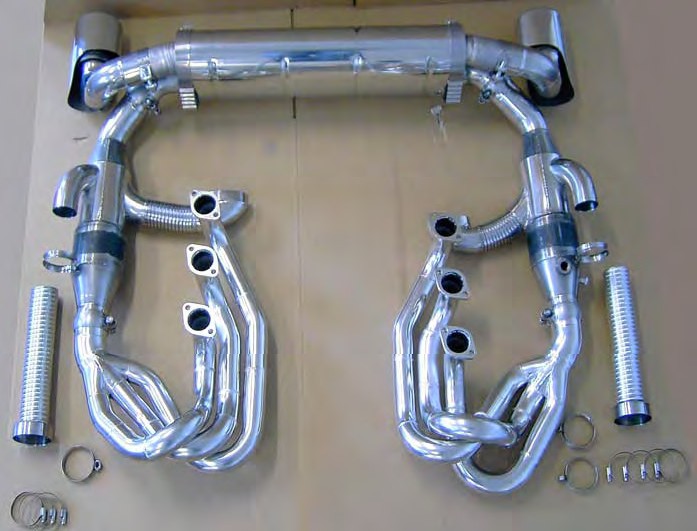
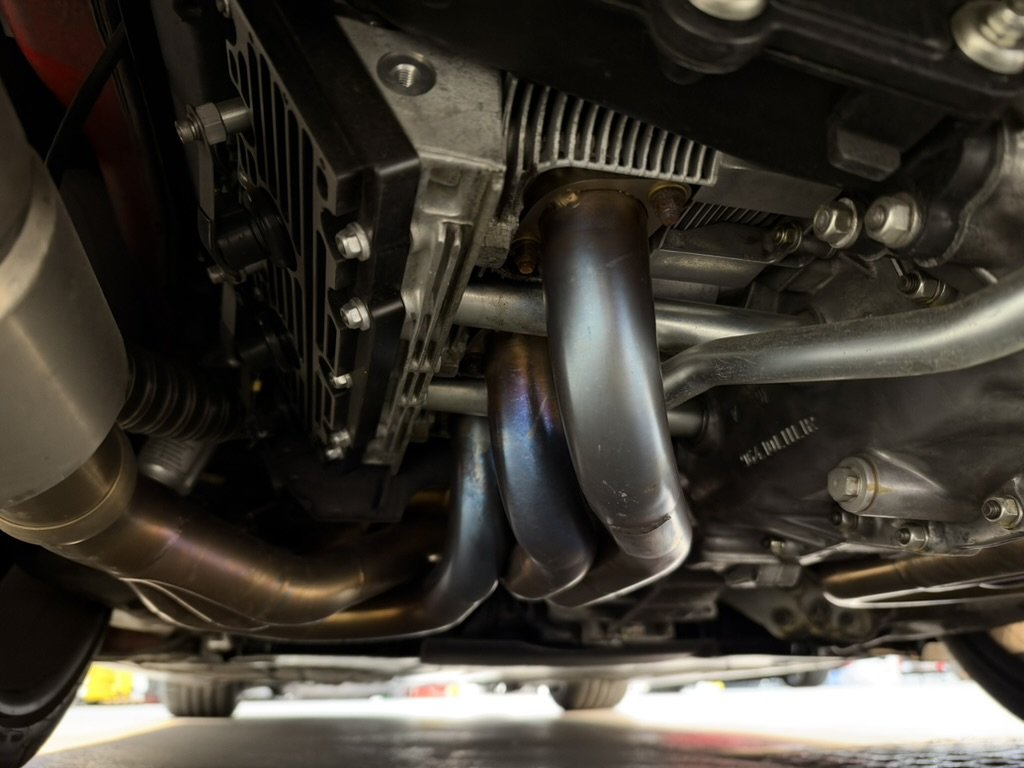
- Long-tube headers, the longest M&M makes for the 964, with primaries segmented and welded under forming gas, so wall thickness stays even through the bends.
- Three primaries per bank merge into a 2.5" (63.5 mm) motorsport collector.
- Cone-and-clamp "Aeroquip"-style joints with one bolt per connection.
- A muffler built on double-perforated absorption tubes in a trapezoidal layout, a half counter-current design, lower in restriction than a baffle-plate muffler.
- Dual 4.5" oval double-wall tips on ball joints, which required a left narrow-body rear bumper end cover with the second outlet cut-out.
- Weight about 21–27 kg against roughly 35 kg for the stock system. FVD lists the titanium version at 19.3 kg.
M&M's own claim for the system on a stock 964 is about 25 hp and 23–35 lb-ft. On this engine the system sets the scavenging that the cam overlap and the exhaust-port work were modeled against: a long equal-length primary into a 2.5" collector sets the pulse timing that the 993 RS cams were ground against. It is a cat-bypass system and not emissions-legal; the M&M part number and the customs line indicate it was sourced direct from M&M.
Driveline & Chassis
The driveline is a rebuilt G50 with a torque-biasing diff and an RS flywheel and clutch.
| System | What was done | Notes |
|---|---|---|
| Gearbox | G50/03 5-speed full rebuild (sublet): new synchros, input-shaft and diff bearings, hardware plating | Stock ratios |
| Differential | Wavetrac torque-biasing LSD (sublet) | Helical ATB; no clutch packs to wear |
| Clutch | RS flywheel (SP39A), RS clutch 964 116 028 03, new release bearing, slave, fork kit, guide tube, pilot bearing, ring gear, ARP-style bolts | Single-mass RS flywheel replaces the 964 dual-mass |
| Fluids | Motul Gear 300 LS 75W-90 | LS additive for the Wavetrac |
| Suspension | H&R Street Performance coilovers (via M8 Gram) | Receipt separate from Foremost |
| Alignment | Gran Turismo East, 9/18/2024 printout | Sheet in records |
| Steering | Power steering pump fully rebuilt and replaced | Belt-driven off the Rothsport pulley hub |
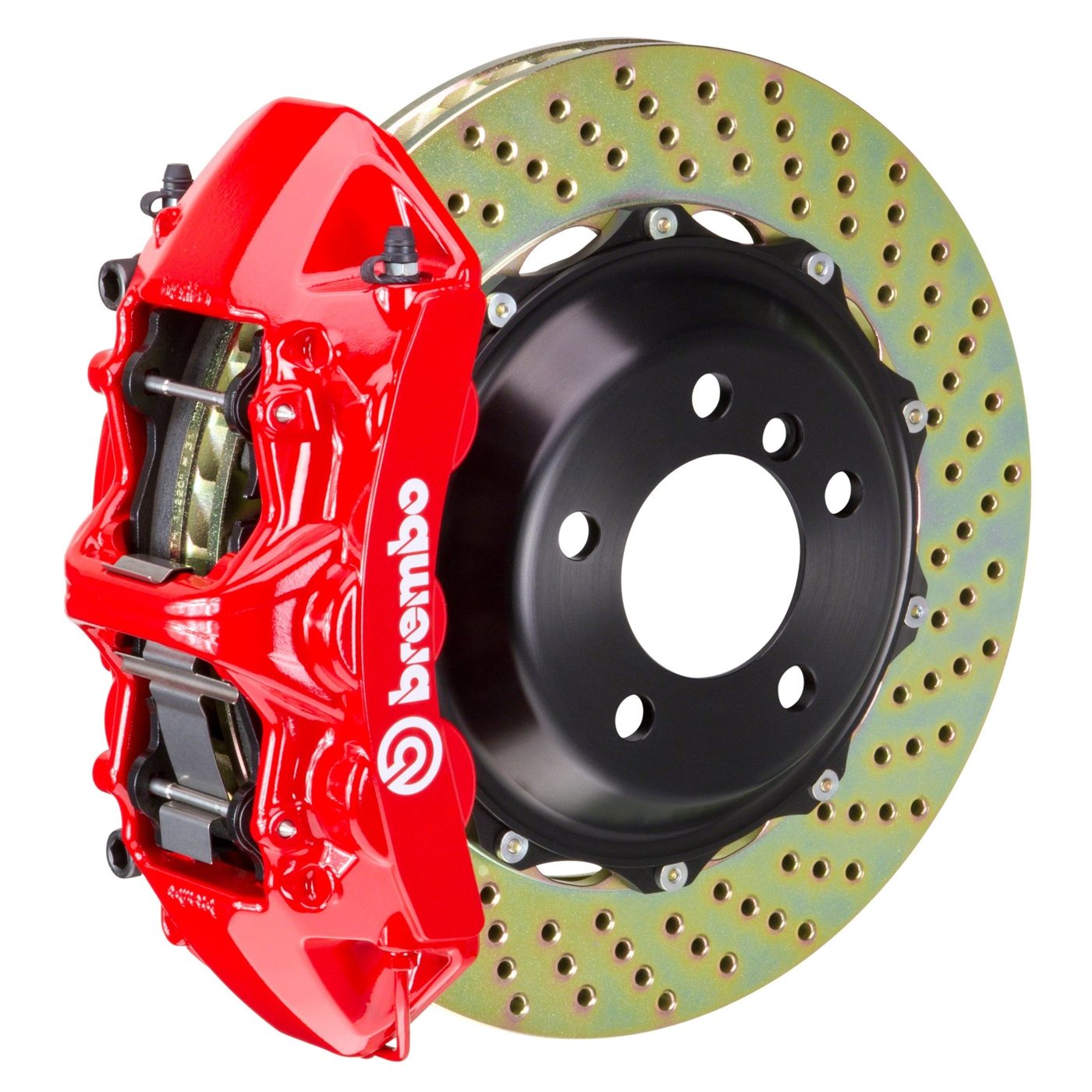
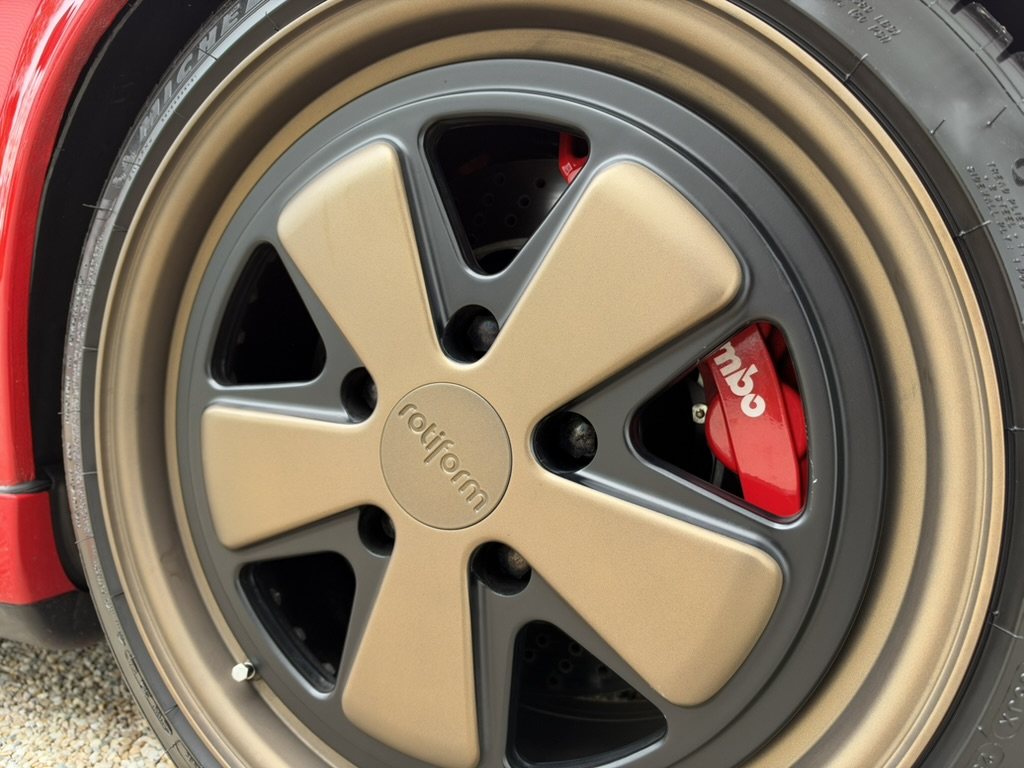
| Brakes | BBi Autosport / Brembo GT system (brm.964.GT6.R.CD): 6-piston monobloc front on 355×32 mm two-piece cross-drilled discs, 4-piston rear on 345×28 mm two-piece discs, Goodridge stainless lines, billet adapters; ATE Type 200 fluid | GT Red calipers; the 6-piston/355 mm front requires 18" wheels |
| Wheels | Rotiform forged three-piece five-spoke in bronze, 964 narrow-body fitment, OEM lug nuts, lock set | 18" diameter, set by the brake package |
| Tires | Michelin Pilot Sport 4S |
6-piston cast monobloc front calipers on 355 × 32 mm two-piece cross-drilled discs, 4-piston rears on 345 × 28 mm two-piece discs, pre-assembled axle sets with Brembo CNC billet adapters and Goodridge stainless lines. That is the largest of BBi's 964 options — the 17-inch kit steps down to 4-piston fronts on 332 mm — and it is the choice that fixed the wheel diameter at 18 inches. The 355 mm front disc and 6-piston caliper add rotor mass and heat capacity on a car of roughly 3,000 lb; the 18" wheel gives up sidewall against the factory 17".
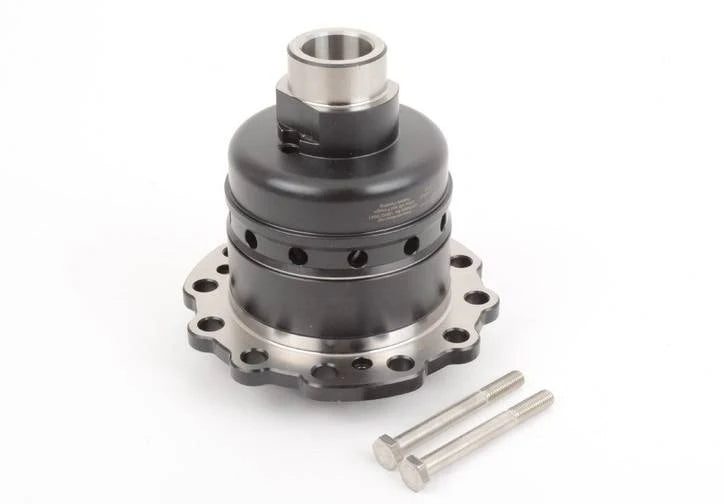
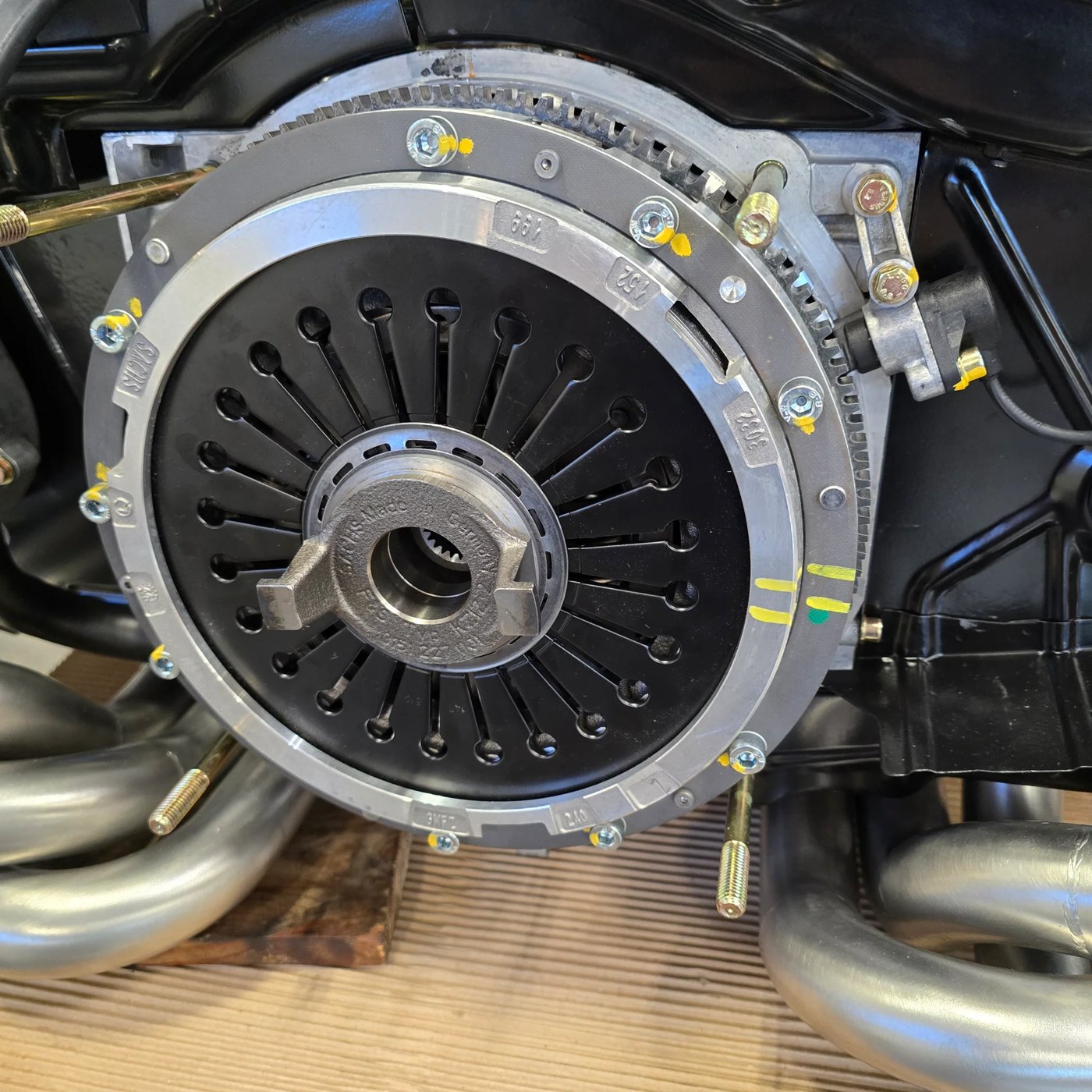
The RS single-mass flywheel sharpens throttle response, and the Wavetrac keeps the torque usable out of corners with no clutch packs to wear or chatter. The gearbox keeps the stock G50/03 ratios with the 3.818 first, so the 1–2 gap the 964 is known for remains, with more torque to fill it. A 3.154 RS/RSR first-gear set is the factory-pattern change if that gap is ever addressed. Some of the dealer listings said "6-speed"; the car has the G50 5-speed.
Body, Lighting & HVAC
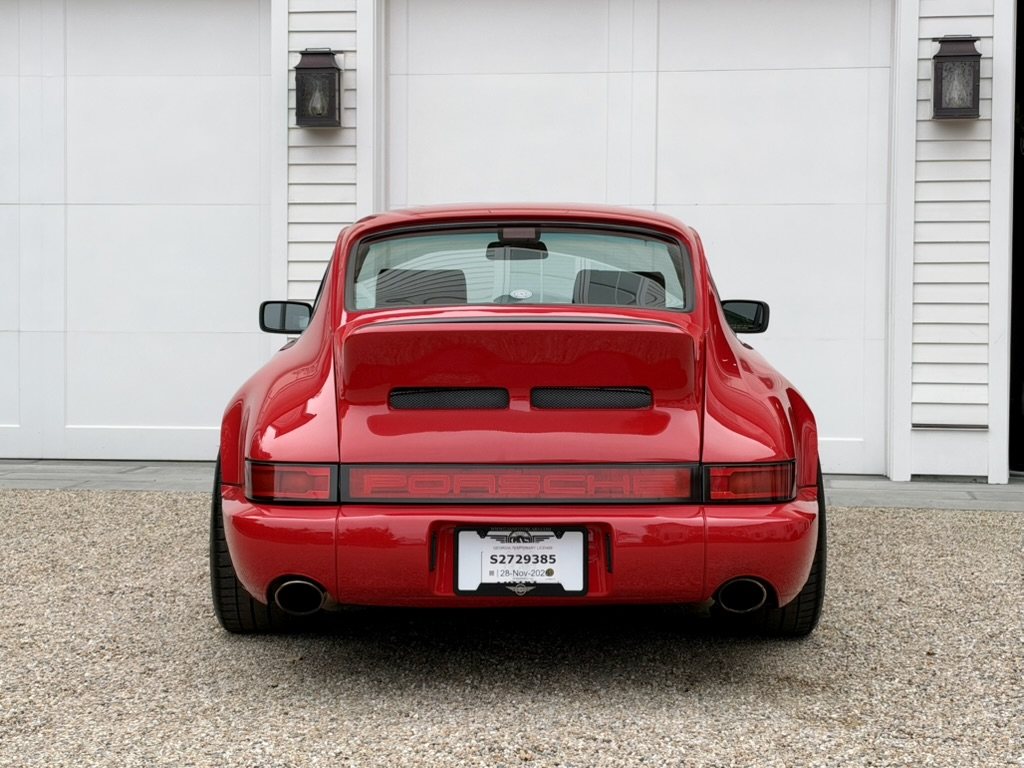
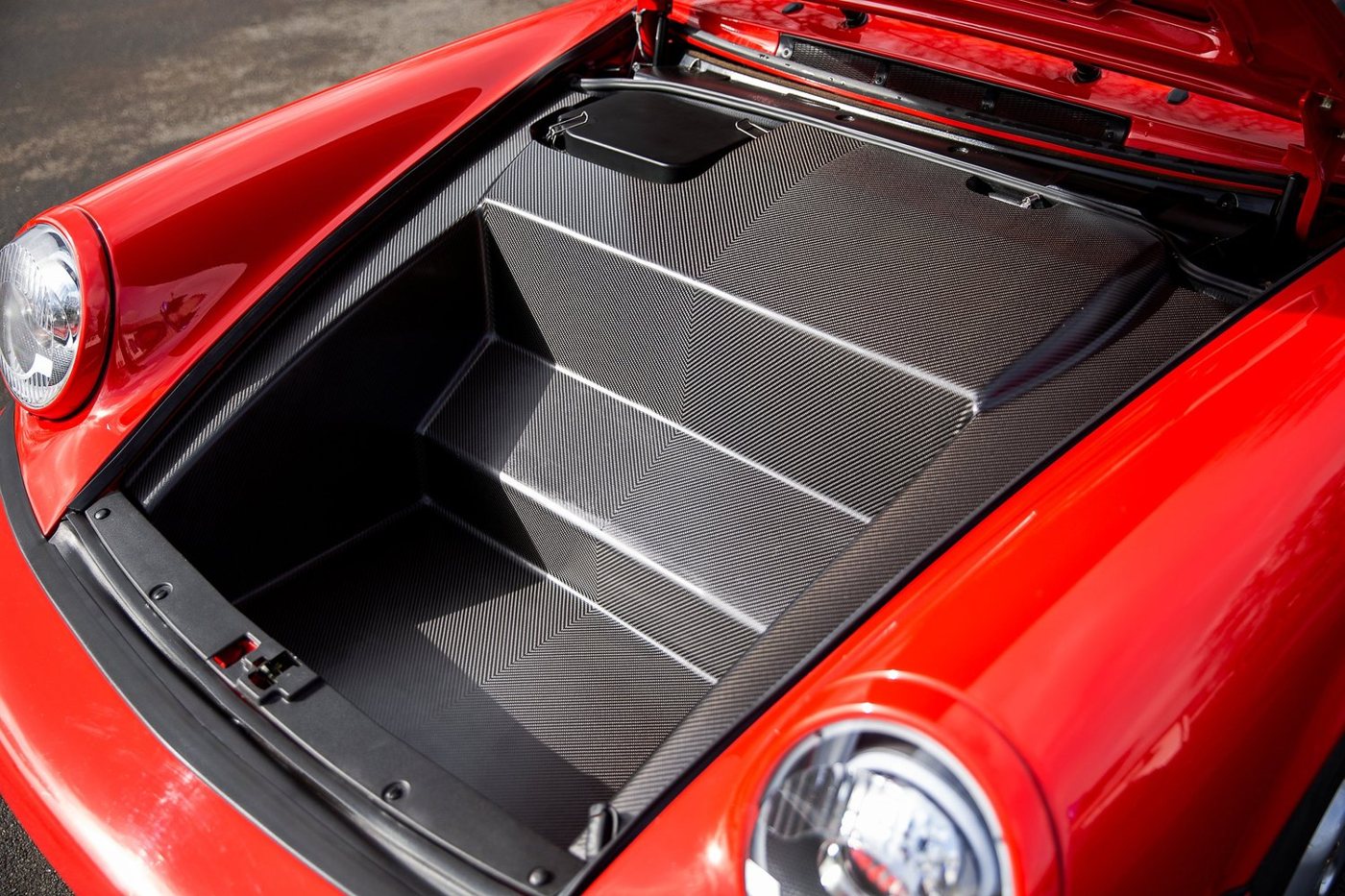
The body work is carbon where the factory used steel or plastic, RS aerodynamic pieces and period-correct lighting, plus an electric A/C conversion. The ducktail is Stuttgart Classica carbon fibre, in the same prepreg carbon as the frunk insert and the interior pieces.
| Area | Item |
|---|---|
| Body | Stuttgart Classica carbon fibre 964 ducktail with vents |
| Body | RS front splitters, paint-matched to the body |
| Body | Rear bumper end cover, left, narrow body GRP (second exhaust outlet) |
| Body | Vented carbon engine lid, carbon front trunk lid, Stuttgart Classica carbon 964/993 frunk insert |
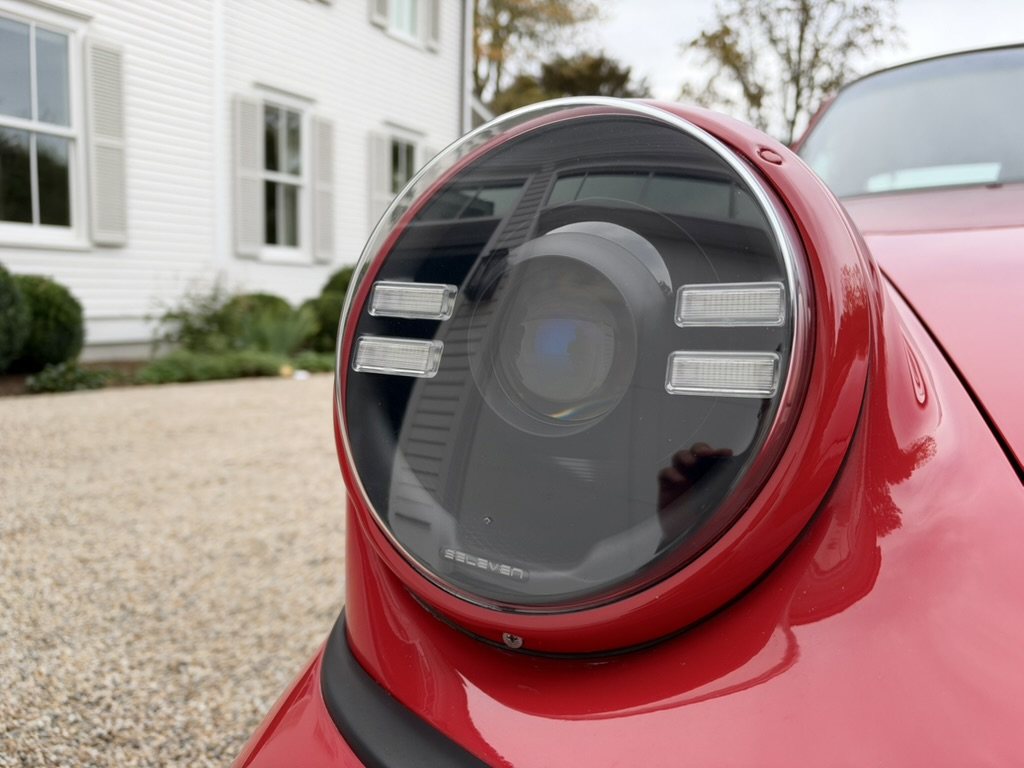
| Lighting | Phoenix black headlights (9ELEVENheadlights inv. #1774, 8/1/2022) |
| Lighting | Blomer Classic 964 3-piece illuminated rear reflector and corner lights, limited-run production |
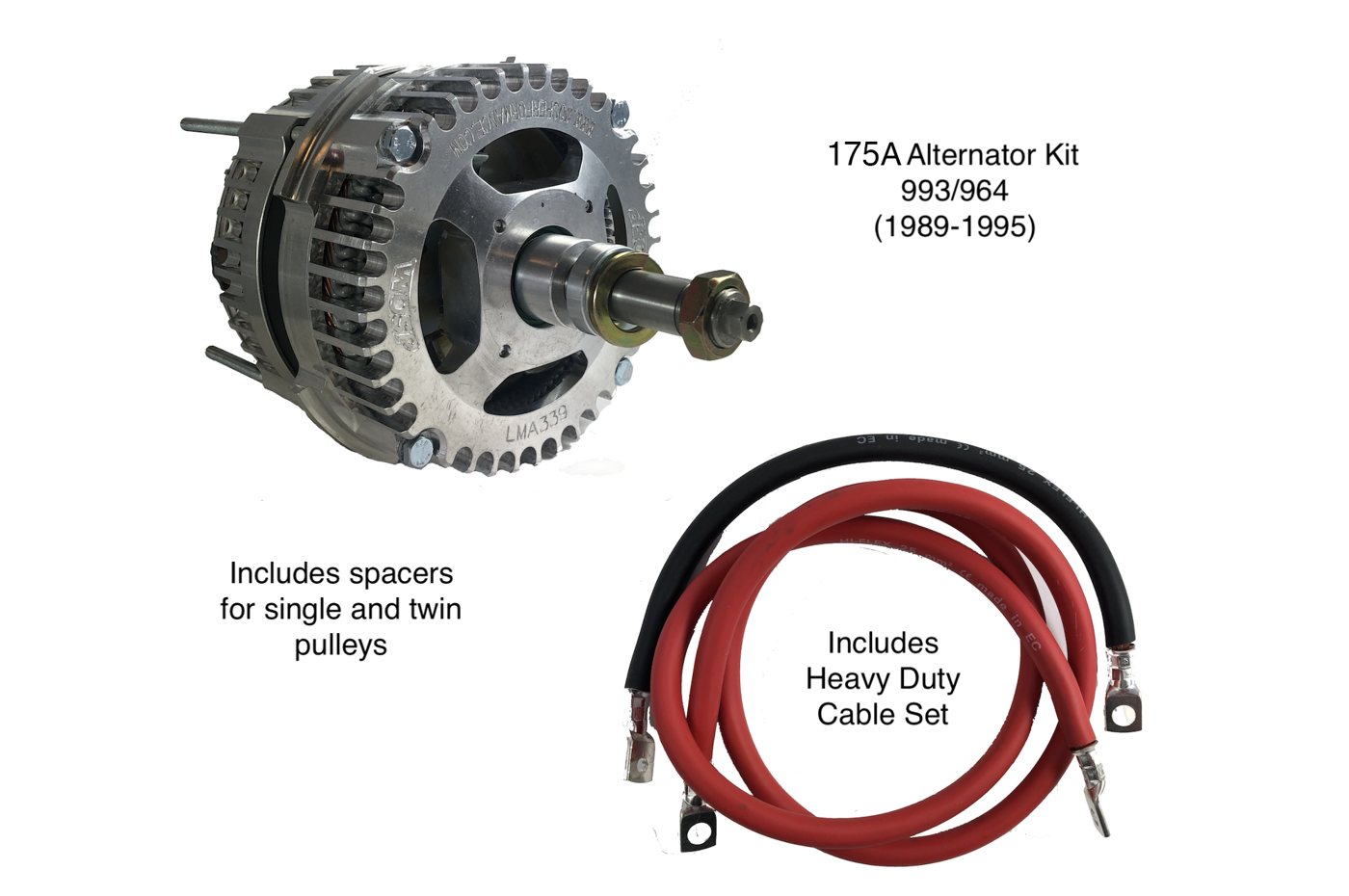
| Electrical | Classic Retrofit high-output 175 A alternator, 964/993 (1989–1998) kit |
| Electrical | Combination switch, hazard switch, headlight housing seals |
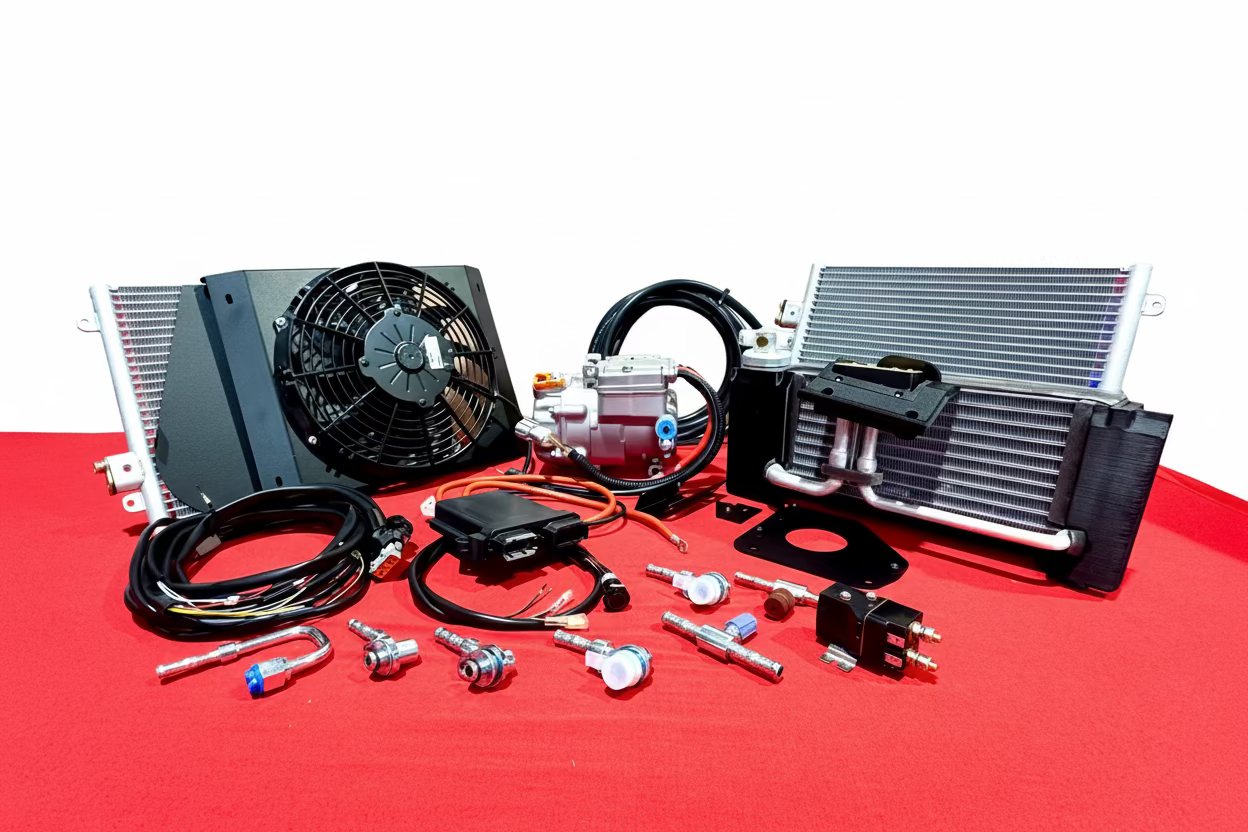
| HVAC | Electric A/C system for 964/993, two condensers (Classic Retrofit) |
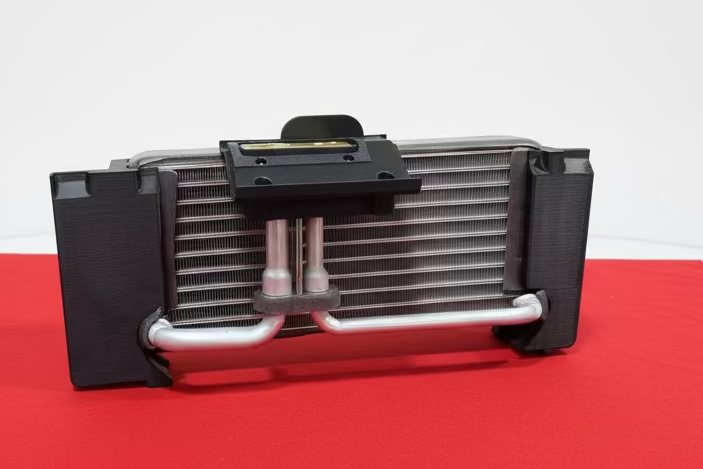
| HVAC | Evaporator blower motor assembly, parts and welding, heater hoses, R134a |
| Seals | Sunroof, door, fender cowl seals; hood and decklid struts |
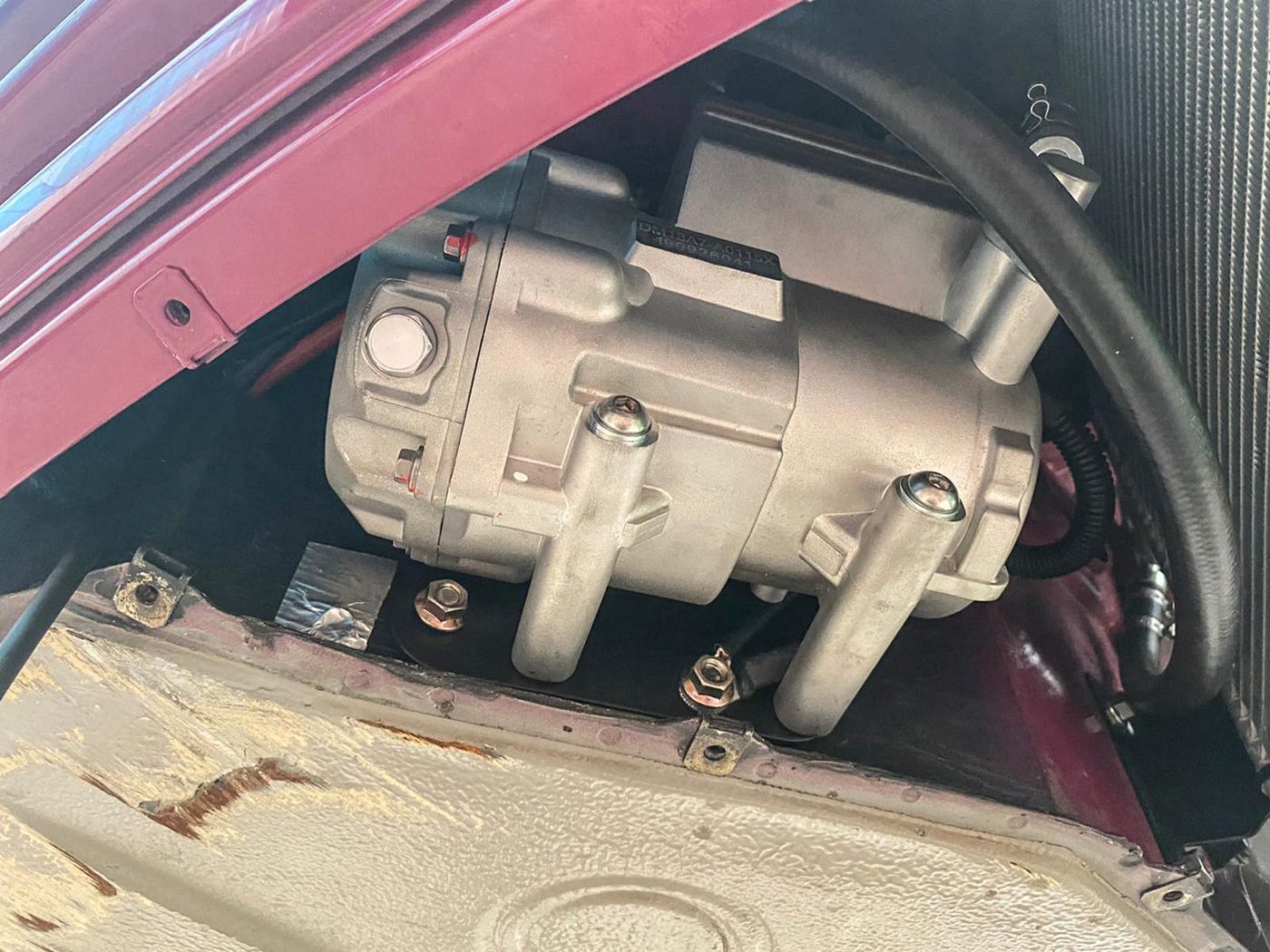
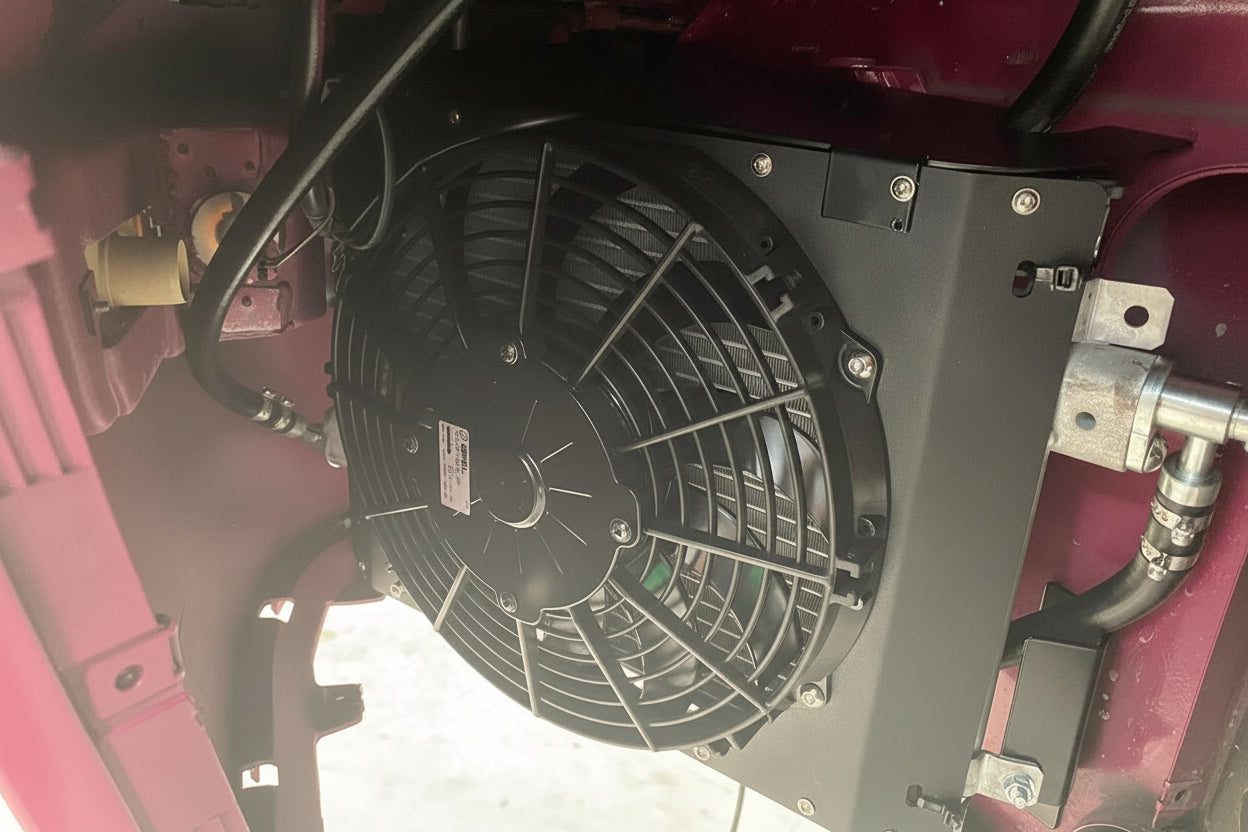
The factory 964 system uses a belt-driven compressor on the engine, a condenser in the engine lid and a second under the front, and takes 5–10 hp at the crank when engaged, with a corresponding drag on throttle response. The Classic Retrofit kit replaces the compressor with a compact electric unit mounted in the front trunk beside the spare-tire well, fed by two condensers in the front wheel arch, and retains the factory blower and fresh-air vents. Everything else in the system is new: lines, receiver-drier, high-performance evaporator, and a control box that works from the original CCU or a single button. All of it sits at the front of the car. The engine-side load is under 1 hp.
On this engine the conversion did two things. It removed the compressor and its belt from the accessory drive, which is why the Rothsport pulley hub conversion (needed for the MoTeC crank trigger) could be done without an A/C bracket. And it moved the A/C load from the crank to the electrical system, which is the reason for the alternator: Classic Retrofit recommends an upgraded alternator for most installations, and the car carries its 964/993 high-output 175 A unit. The compressor draws heavily at idle with headlights, blower and fans running, and the kit ships with conservative compressor-speed and current limits set for a stock alternator that are opened up once the higher-output unit is fitted. Reported results on similar 964 installations are vent temperatures below the factory system's and steady in traffic, with oil cooling unaffected.
Interior
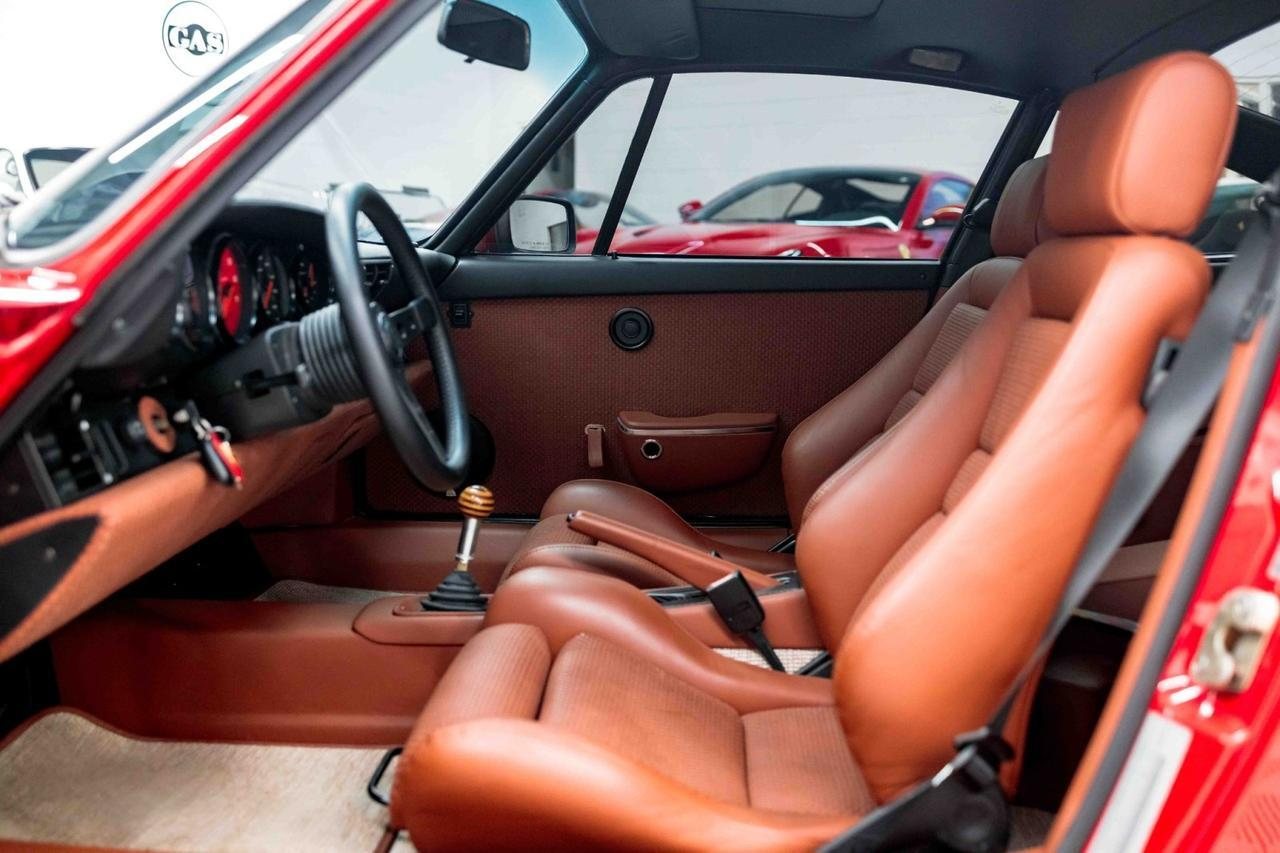
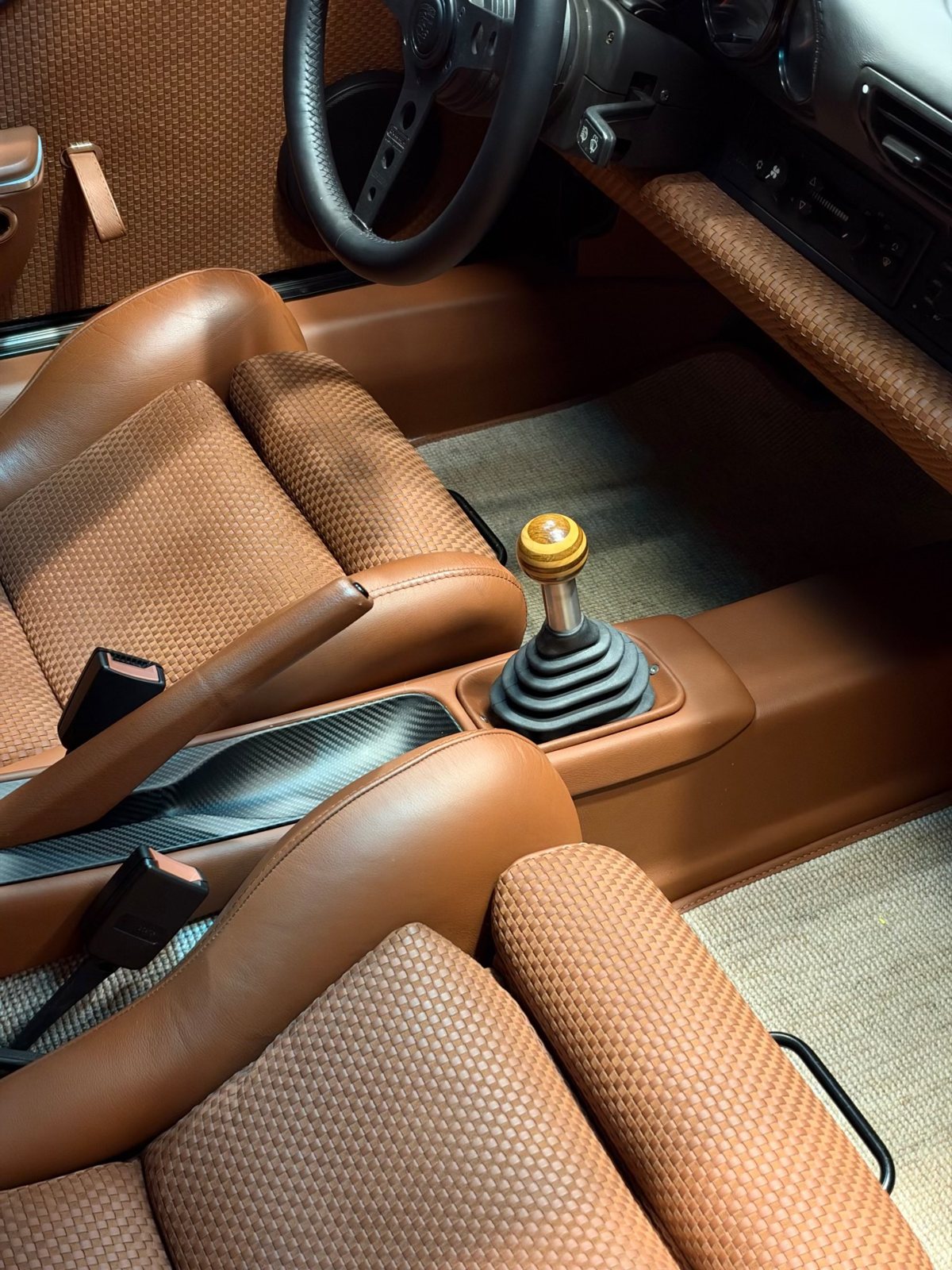
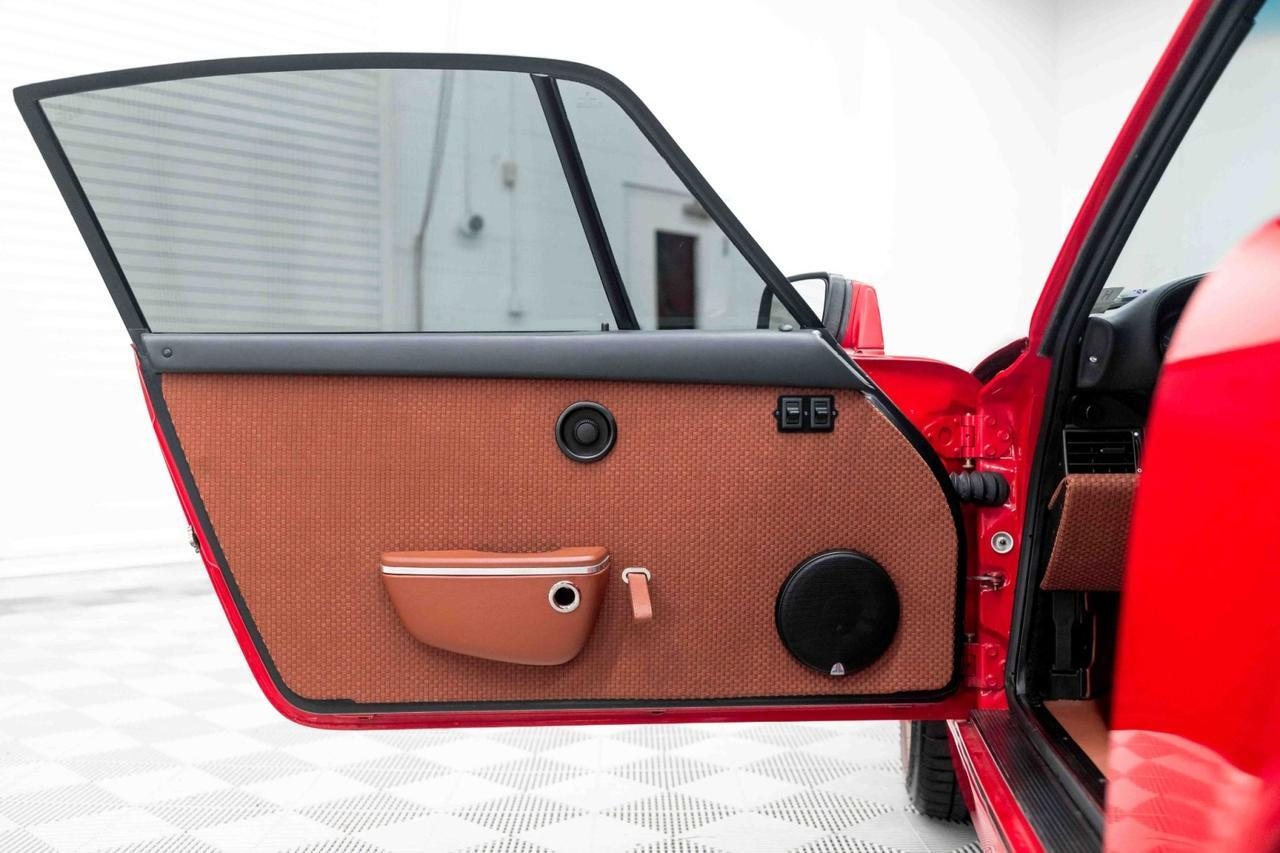
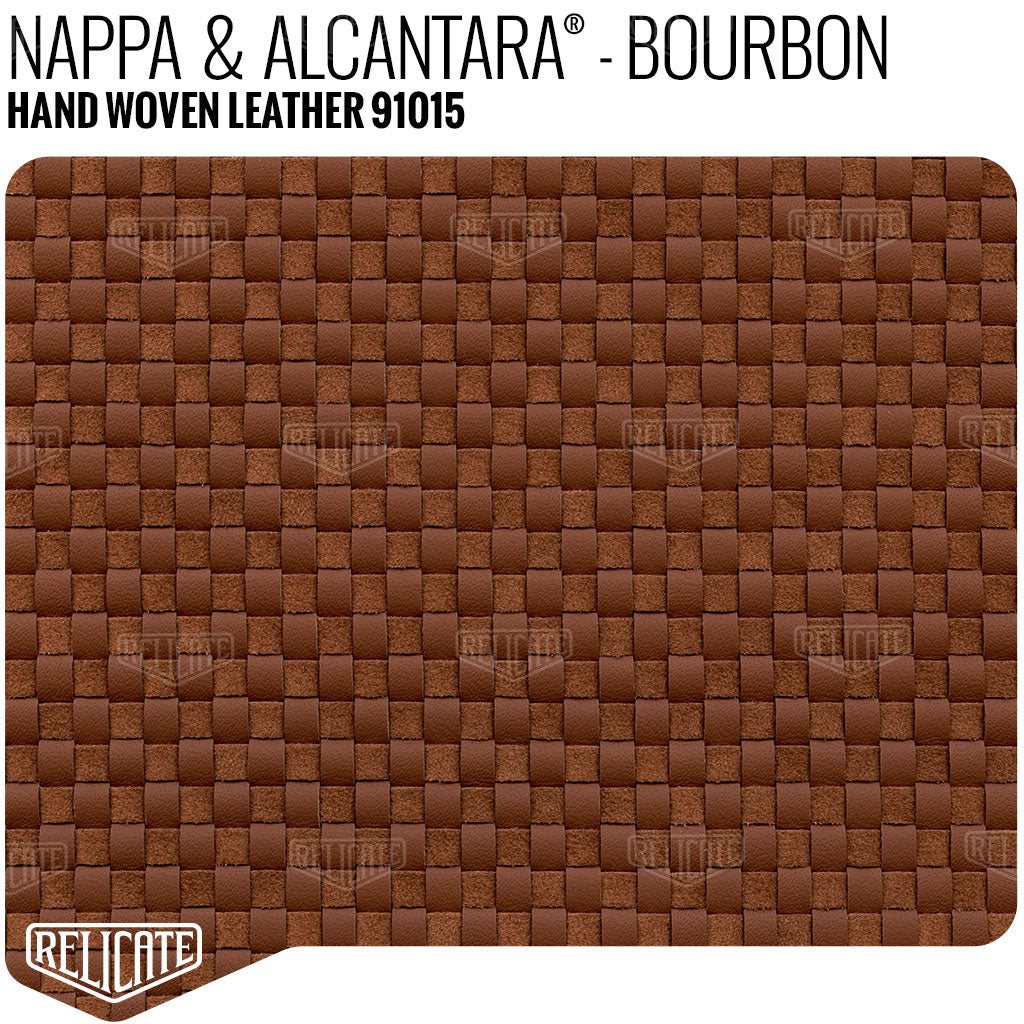
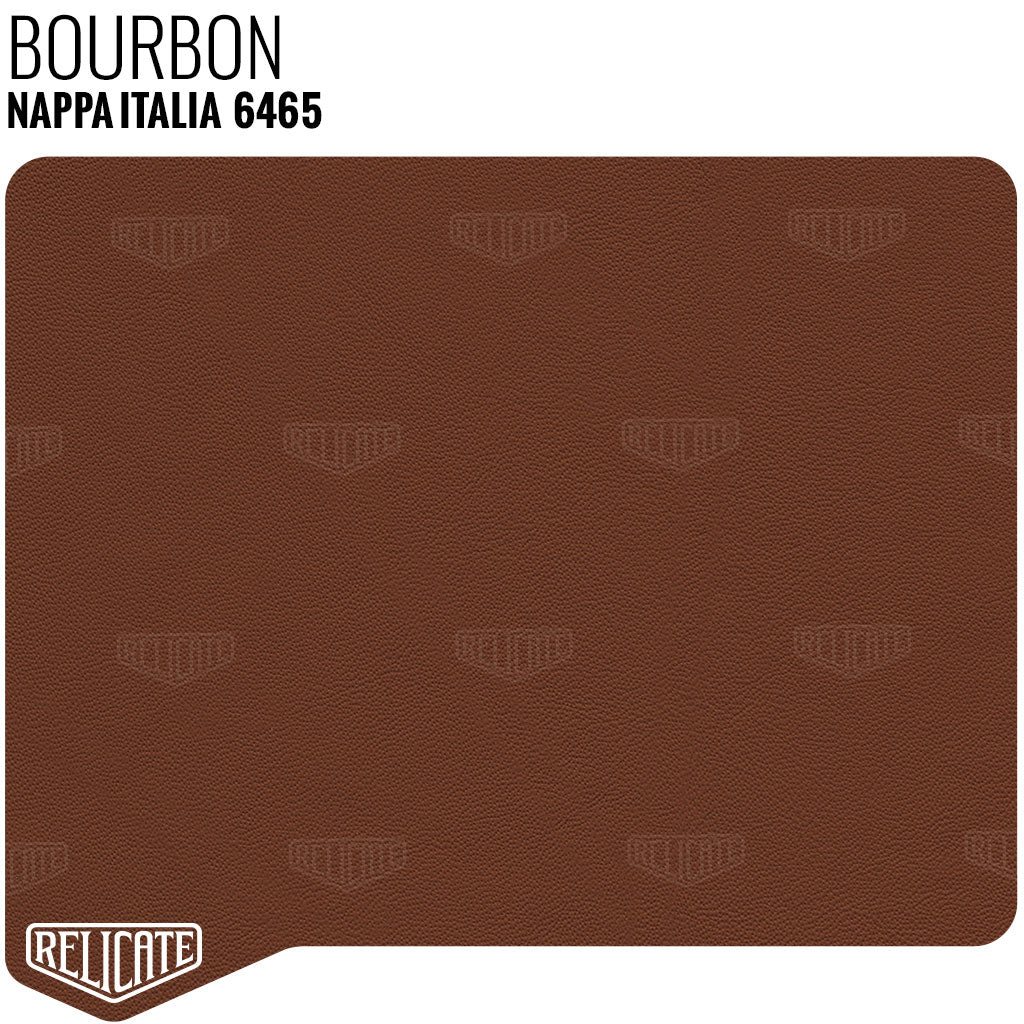
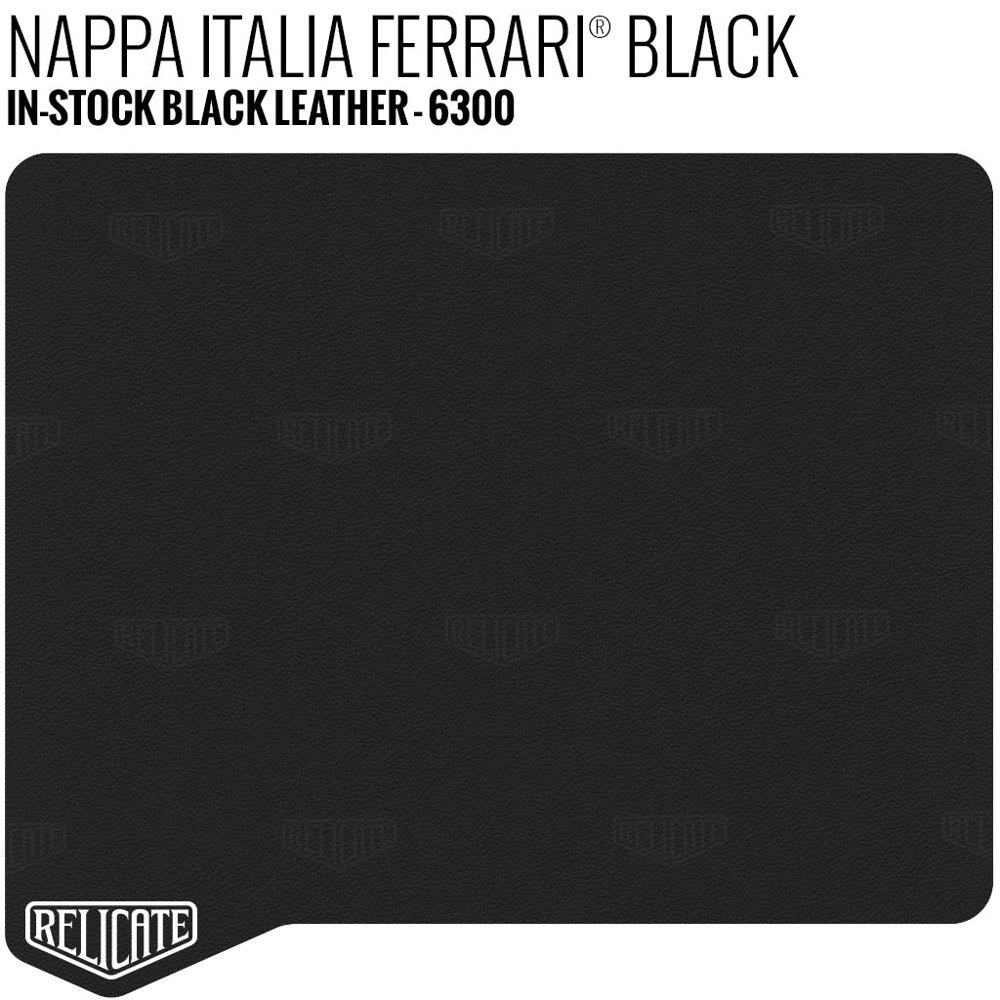
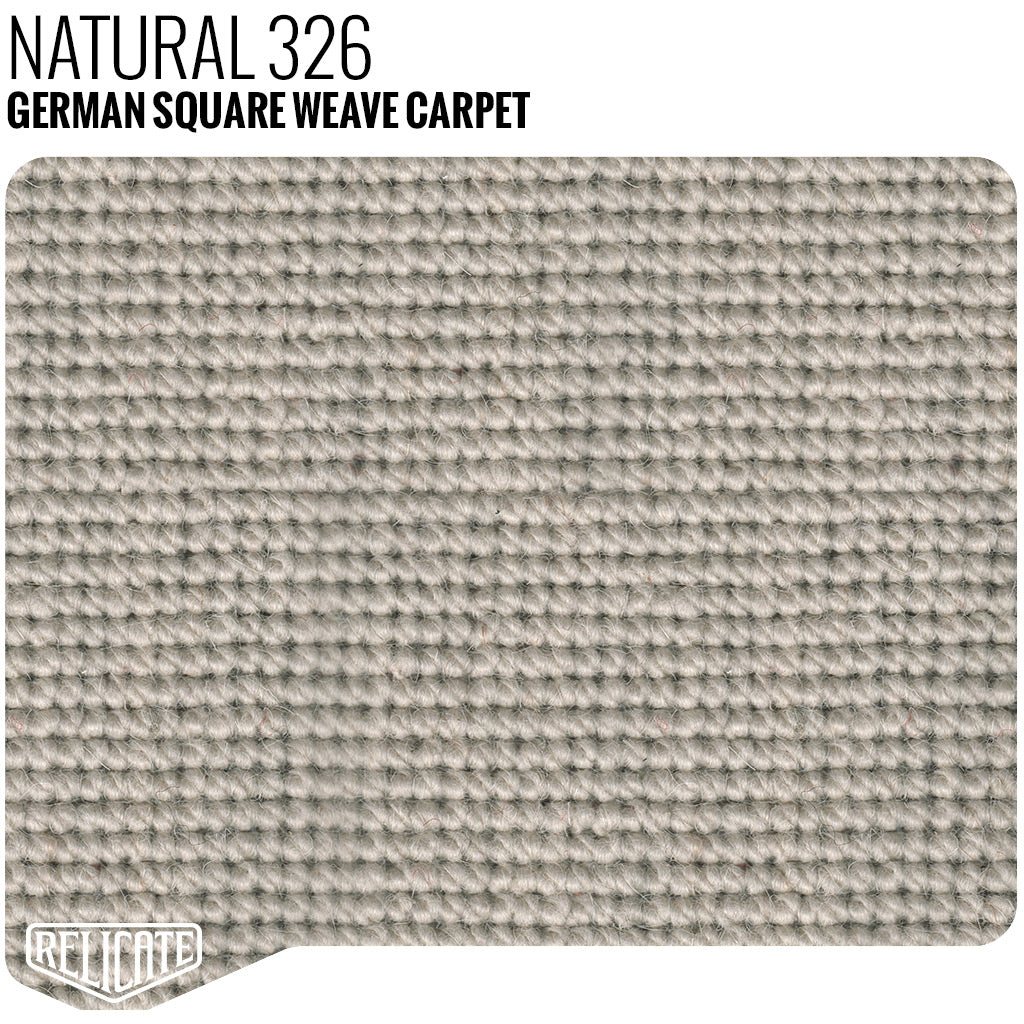
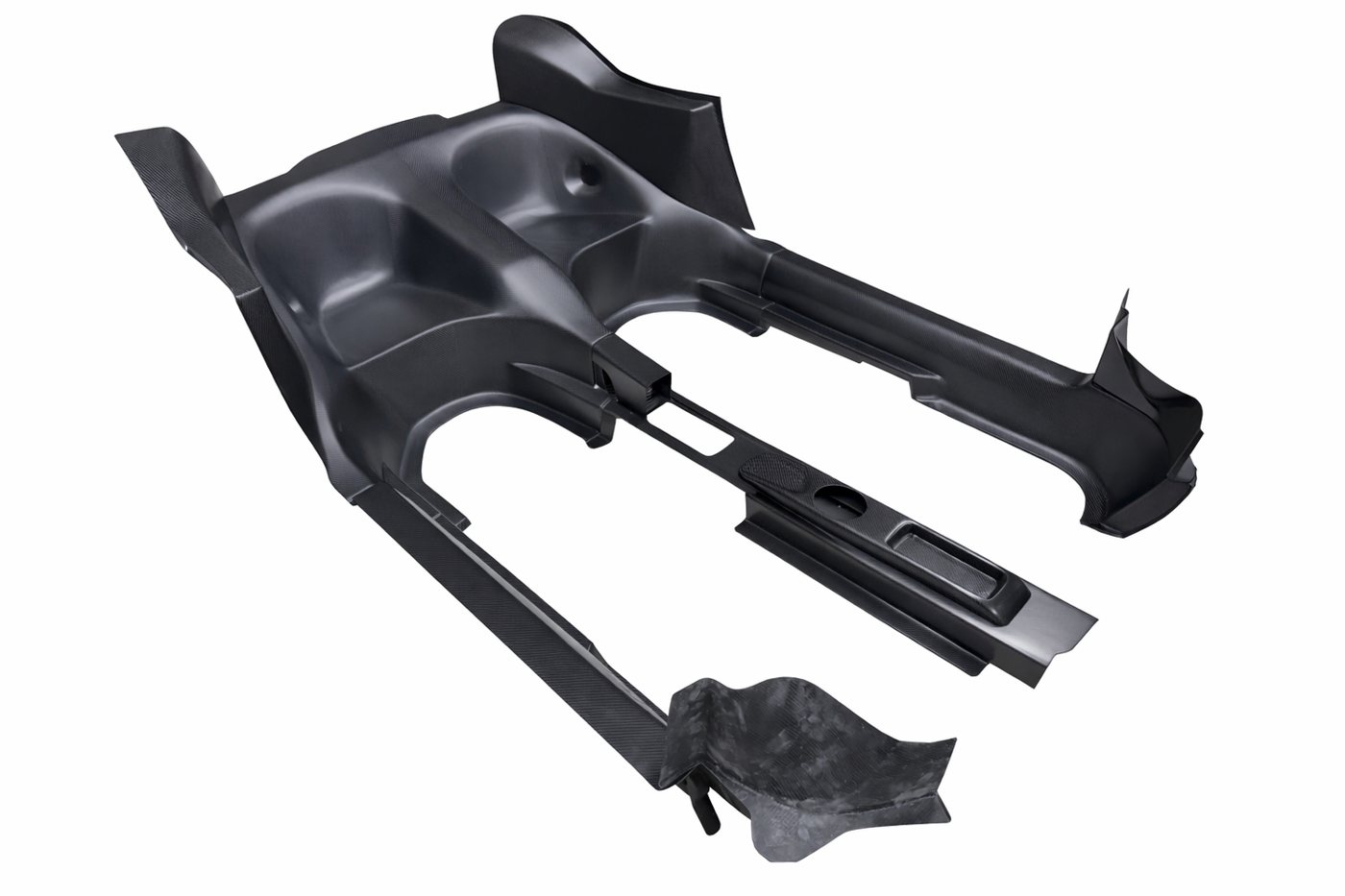
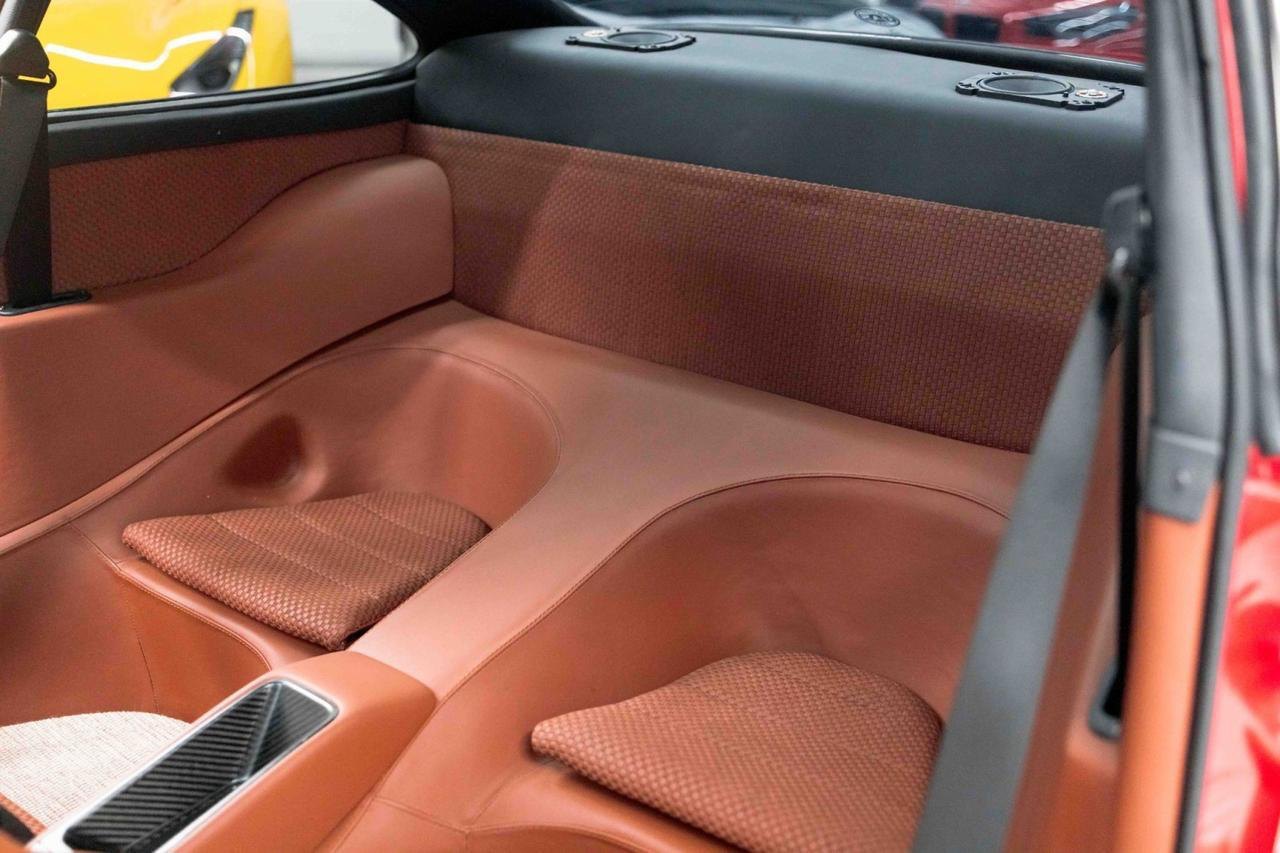
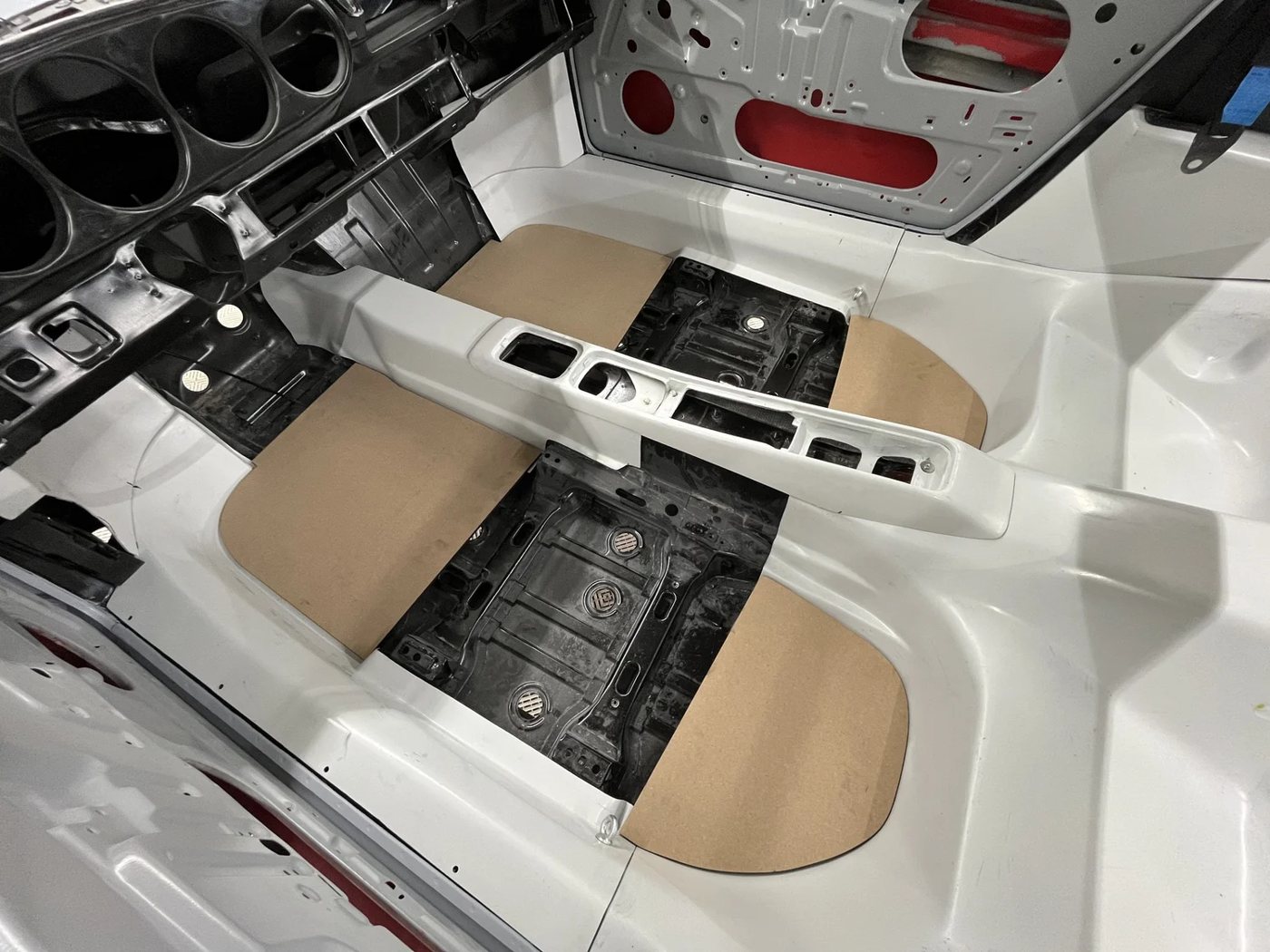
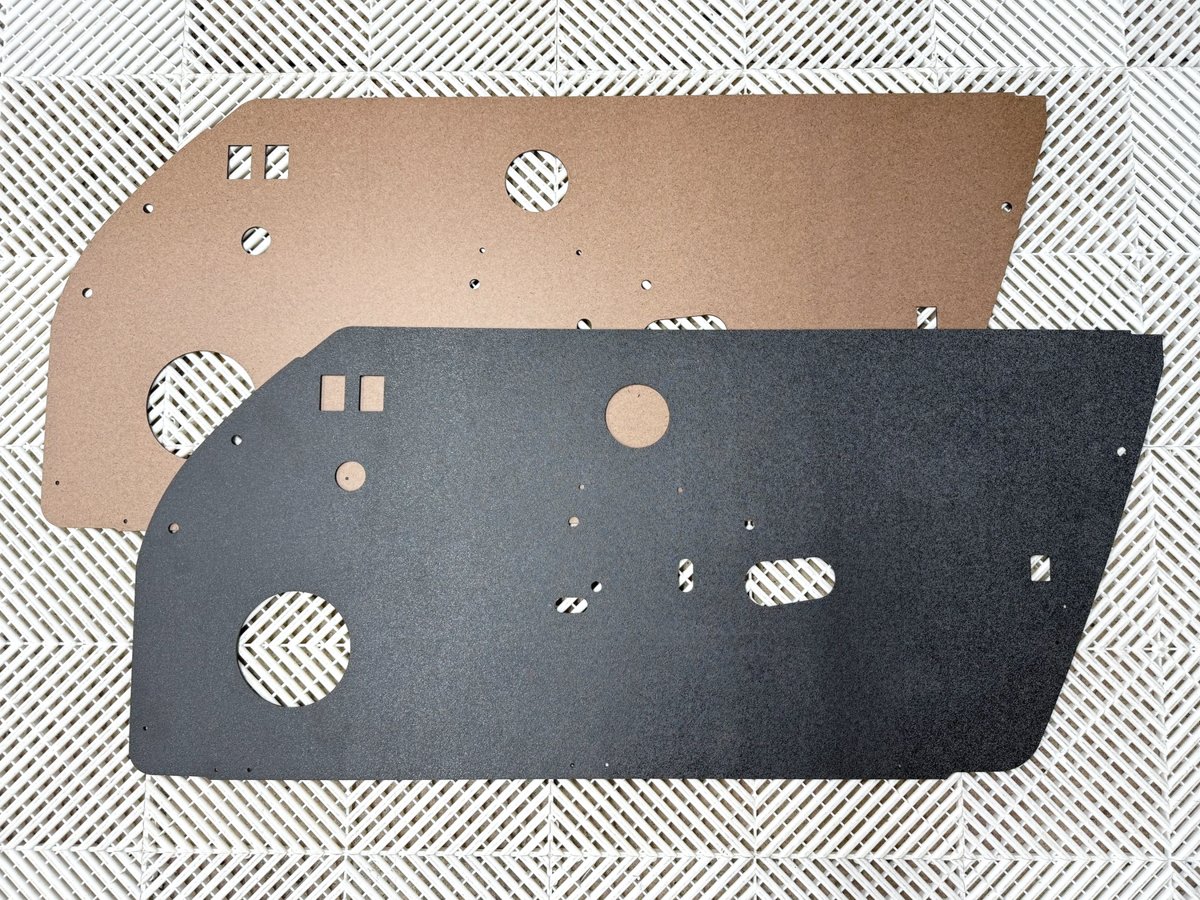
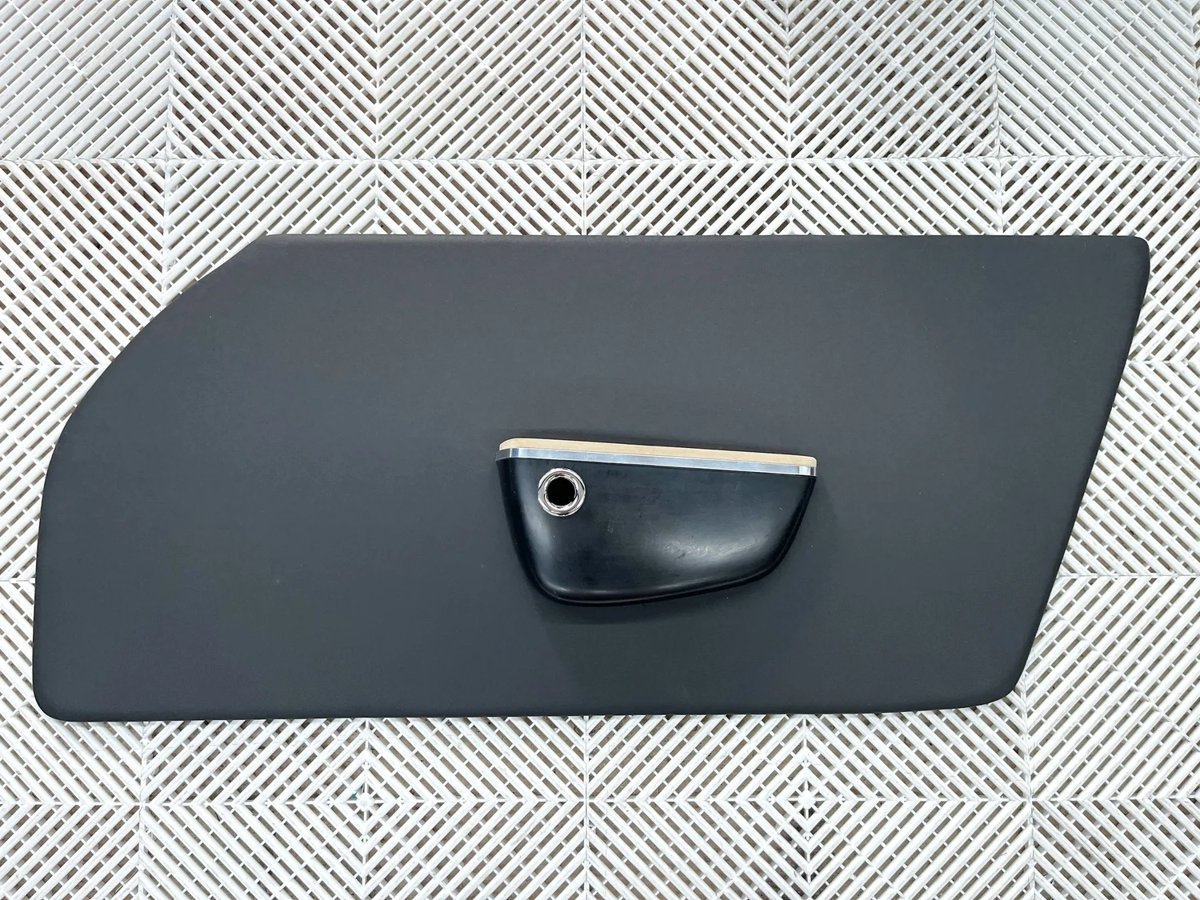
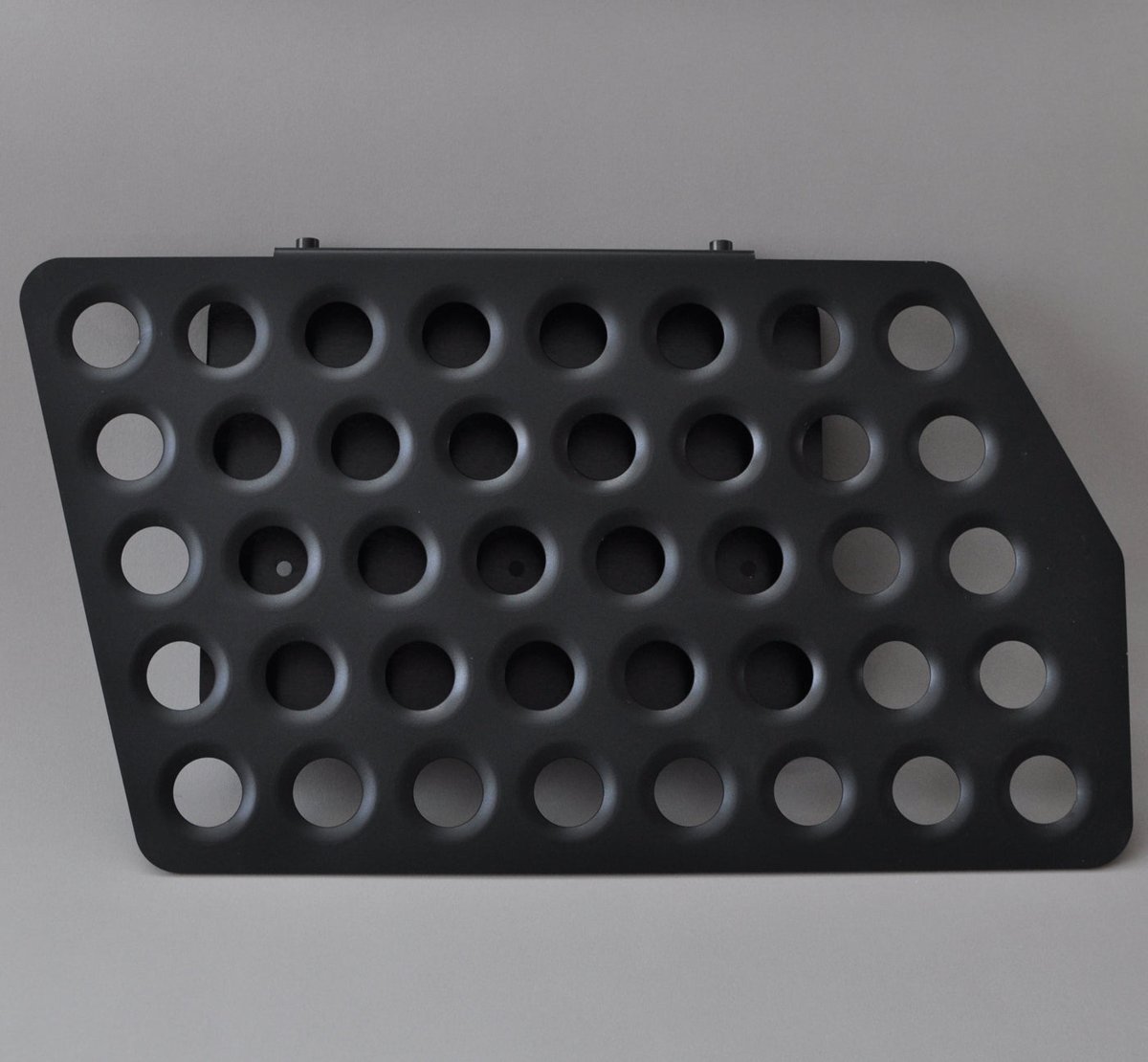
The interior is built on a Stuttgart Classica smooth interior tub in carbon/Kevlar composite, with Stuttgart Classica CNC-routed floor boards beneath the carpet, a Stuttgart Classica 964/993 short centre console with the shift cup integrated, and a carbon centre console tray kit; the front trunk carries the Stuttgart Classica carbon frunk insert over the space-saver. The door cards are Stuttgart Classica blank RS panels (0.125" ABS, 1969–97 pattern), carrying Stuttgart Classica GRP door pockets with integrated armrests, built from fibreglass, stainless steel, wood and aluminium and supplied uncovered for trimming. Every surface was then retrimmed in Relicate materials: hand-woven Nappa and Alcantara in Bourbon (5 mm strips of Nappa Italia Bourbon 6465 leather and Alcantara 2930 Hazelnut, woven in Italy, 39" wide) on the door cards, the lower dash and glovebox face, the tub and the seat centres; and smooth Nappa Italia Bourbon 6465 (1.0–1.2 mm, matte automotive topcoat) on the seat bolsters, the transmission tunnel, the armrests, the door pockets and the remainder of the tub. The carpet and mats were cut from Relicate German Square Weave in Natural 326, a 100% wool, 71"-wide, 3/16" carpet of the type Porsche fitted in period, with Silverlake Projects aluminium floorboards in both footwells: 5000-series aluminium, hand-dimpled and anodised black, made in Los Angeles. The seats are custom Recaro LXCs trimmed in the same two materials; the dash top, the door tops, the rear shelf and the adjoining trim were retrimmed in Relicate Nappa Italia Ferrari Black 6300 (1.0–1.2 mm, matte automotive topcoat, made in Italy); the headliner is new; the shift knob is laminated wood on a leather gaiter; the steering wheel is a leather-wrapped MOMO Prototipo, the three-spoke wheel Porsche fitted to the 911 R and the early RS cars; the cluster was rebuilt by Hamps with red gauge faces. A factory 964 third brake light was added at the rear window: the 964's tail lights sit low, and a taller following car can lose sight of them under braking.
Before the trim went on, sound deadening was added in key locations: the chassis floor and tunnel, the inner door skins, the centre console and the tub, for a "rock solid" feel all around. A 964 shell with its factory insulation removed and a composite tub over the steel floor resonates: the door skins, floor pans and tunnel are large, thin panels that ring at the engine's firing frequency (a flat six at 3,000 rpm fires 150 times a second) and over road texture, and a lightweight composite tub adds its own drumming. Constrained-layer damping mat applied to the centre of each panel raises its mass and converts that vibration to heat, so the panel stops ringing; the door then closes with a single thud, the console stops buzzing against the tunnel at idle, and road noise drops, leaving the ITBs and the exhaust as the only sounds penetrating the cabin.
| Area | Item |
|---|---|
| Structure | Stuttgart Classica smooth interior tub, carbon/Kevlar (ordered 3/24/2023), fully trimmed |
| Structure | Stuttgart Classica floor boards for smooth tub, CNC-routed 1/4" MDF |
| Console | Stuttgart Classica 964/993 short centre console, integrated shift cup; carbon centre console tray kit |
| Trim | Relicate hand-woven Nappa & Alcantara, Bourbon (Nappa Italia 6465 / Alcantara 2930 Hazelnut, 5 mm strips): door cards, lower dash and glovebox face, tub, seat centres |
| Trim | Relicate Nappa Italia Bourbon 6465, smooth: seat bolsters, tunnel, armrests, door pockets, tub |
| Trim | Dash top, door tops, rear shelf and adjoining trim in Relicate Nappa Italia Ferrari Black 6300; new headliner |
| Carpet | Relicate German Square Weave, Natural 326, 100% wool: full custom carpet set and mats |
| Seats | Custom Recaro LXC seats, woven centres with smooth Bourbon bolsters |
| Doors | Stuttgart Classica blank RS door cards (ABS); Stuttgart Classica GRP door pockets with armrests; fabric pull straps |
| Controls | Laminated wood shift knob on leather gaiter; leather-wrapped MOMO Prototipo three-spoke steering wheel |
| Floorboards | Silverlake Projects 964/993 dimpled aluminium floorboards, anodised black, driver (MT) and passenger |
| Instruments | Hamps dash cluster rebuild, red gauge faces |
| Lighting | Factory 964 third brake light, added for visibility to taller following cars |
| Audio | Porsche Classic radio with JL Audio amplified system: C3-650 and C3-570 speakers, RD400/4 amplifier, rear speakers, marine wiring kit, Blaupunkt adapter |
The audio system is a Porsche Classic head unit driving a JL Audio amplified system: a four-channel RD400/4 amplifier, C3-650 and C3-570 component speakers, rear speakers, and marine-grade wiring, with a Blaupunkt adapter at the head unit.
From Here: Refining the Package
The car is sound as delivered, and the next phase is service, calibration and finishing. The work falls in four stages, in sequence, with one engine-bay item alongside. The parts going on in stages 1 through 3 are shown together at the end of the chapter.
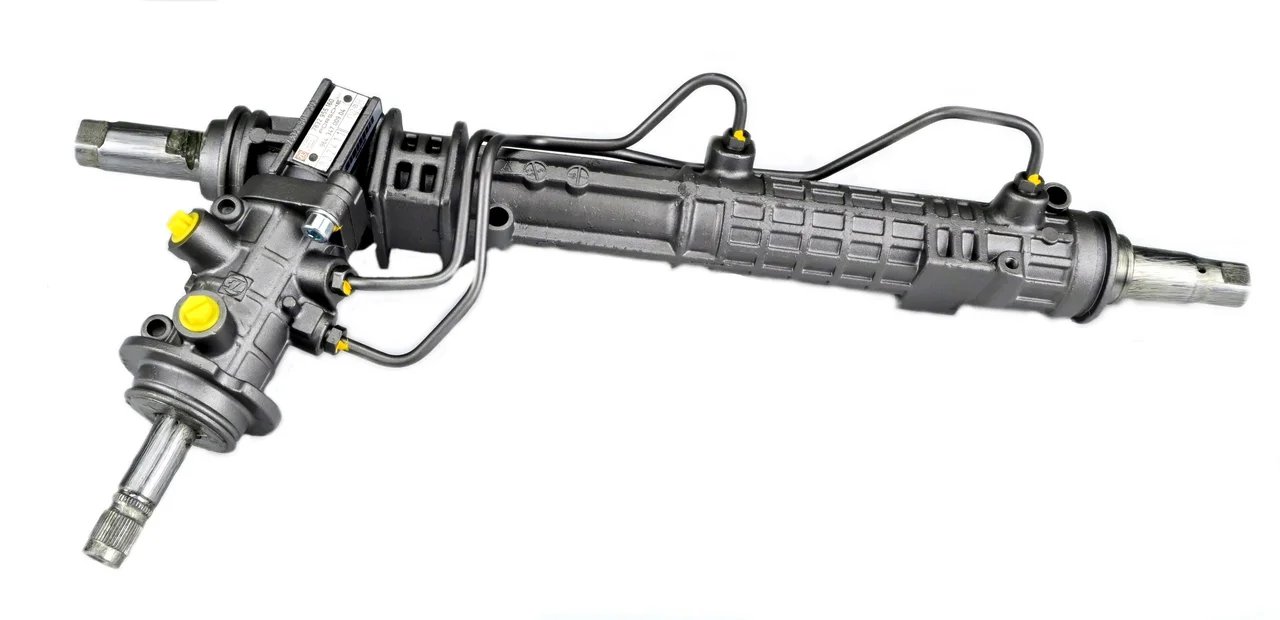
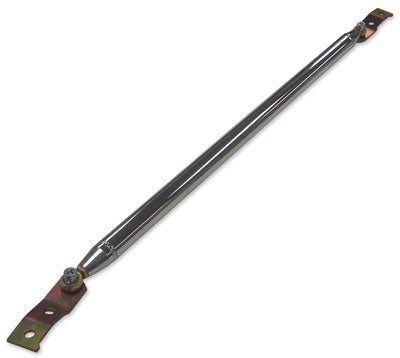
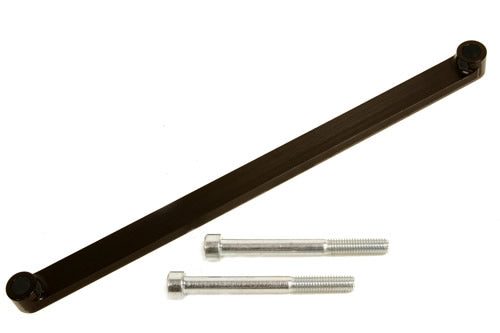
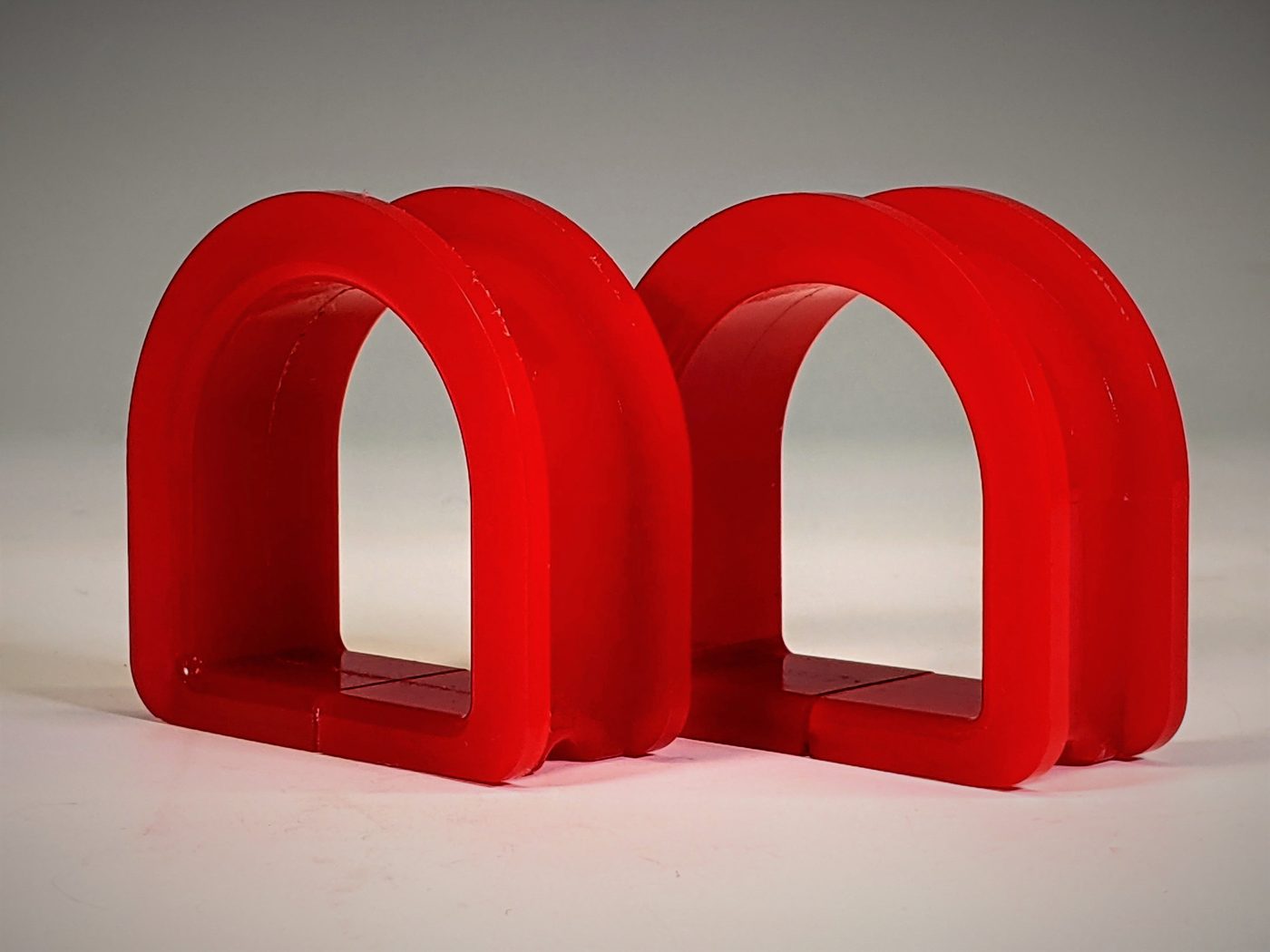
The car goes to Repasi for a full fluid change (engine oil and filter, gearbox oil, brake fluid with a complete bleed) and for the steering. The steering is heavy at low speed; the power steering pump was rebuilt and replaced during the build, so the rack is what remains, and it is being replaced. The remanufactured rack comes from Patrick Motorsports in Phoenix, with new seals and O-rings throughout the valve body and rack housing, new hydraulic lines and fittings, and the pinion and rack teeth fully inspected and checked to specification along with the related parts; Repasi installs it. The bushings, brace and boots ordered from JA Motorsports ship direct to Repasi. The Rothsport bushings replace the factory rubber rack mounts, which deflect under load and contribute to vague on-center feel; the brace ties the rack mounts to the crossmember so the rack cannot shift on its mounts under steering load. A Tarett Engineering alloy strut brace (STBAALU, 964/993 variant) goes in at the same visit: it bolts between the front strut towers with two class 8.8 bolts at each end, with no drilling or welding, and leaves the upper strut mounts free to pivot. While the car is on the lift, Repasi will align it and corner-balance it on their top-line Hunter alignment rig, with the new rack, bushings, brace and strut brace in place, so the alignment is set against the final front-end geometry and the corner weights are set with the driver aboard. The M&M exhaust tips are adjusted on their clamps at the same visit so the two oval outlets terminate symmetrically in the rear bumper cut-outs, at equal depth and height on each side.
Steering parts ordered · 21 Oct 2026 · JA Motorsports · order #88HNHKHNU · ships to Repasi, Stratford. Rothsport Racing RS-161 rack bushings (964/993); Rothsport Racing RS-160 rack performance brace (964/993); two 964 rack boots. Ordered from Joe Anselmo. The remanufactured steering rack itself is supplied by Patrick Motorsports, Phoenix, and ships to Repasi separately.
The MoTeC M800 calibration was done in Atlanta after the engine was completed, without break-in mileage. The commissioning owner has since driven the car enough miles to warrant a once-over, and it will go to Bill T Industries for an assessment of the map and an update to reflect the ambient pressure and temperature range it will see in Connecticut, with cold-start, idle and part-throttle behaviour checked against the new conditions. ITB balance and throttle-plate synchronization will be set during the dyno session as part of the same work, with a replacement cone air filter fitted to the big-bore kit's plenum inlet beforehand so the map is set against a fresh element.
BillT Industries is an EFI conversion and tuning shop in West Haven, Connecticut, working alongside Revolution Motorsports CT. It tunes standalone systems (MoTeC, Haltech, Holley, AEM, Megasquirt), factory EFI, carburetors and CIS on a Dynapack hub dynamometer, repairs and adapts factory-to-standalone harnesses, and builds its own plug-and-play EFI kits for CIS, CIS-E and Motronic Porsches, including an MS3 Pro kit for the 1989–95 911 with a published 964 installation guide. A hub dyno bolts to the hubs in place of the wheels, so the load runs through the driveline without tire slip or strap-down variation. The shop asks that a car arrive with fresh fluids, a nut-and-bolt check, a full tank of the fuel it will be tuned on, and the engine specification in hand — rods, pistons, ring gap, cams, compression, plugs and base fuel pressure — which is the reason the Repasi service comes first.
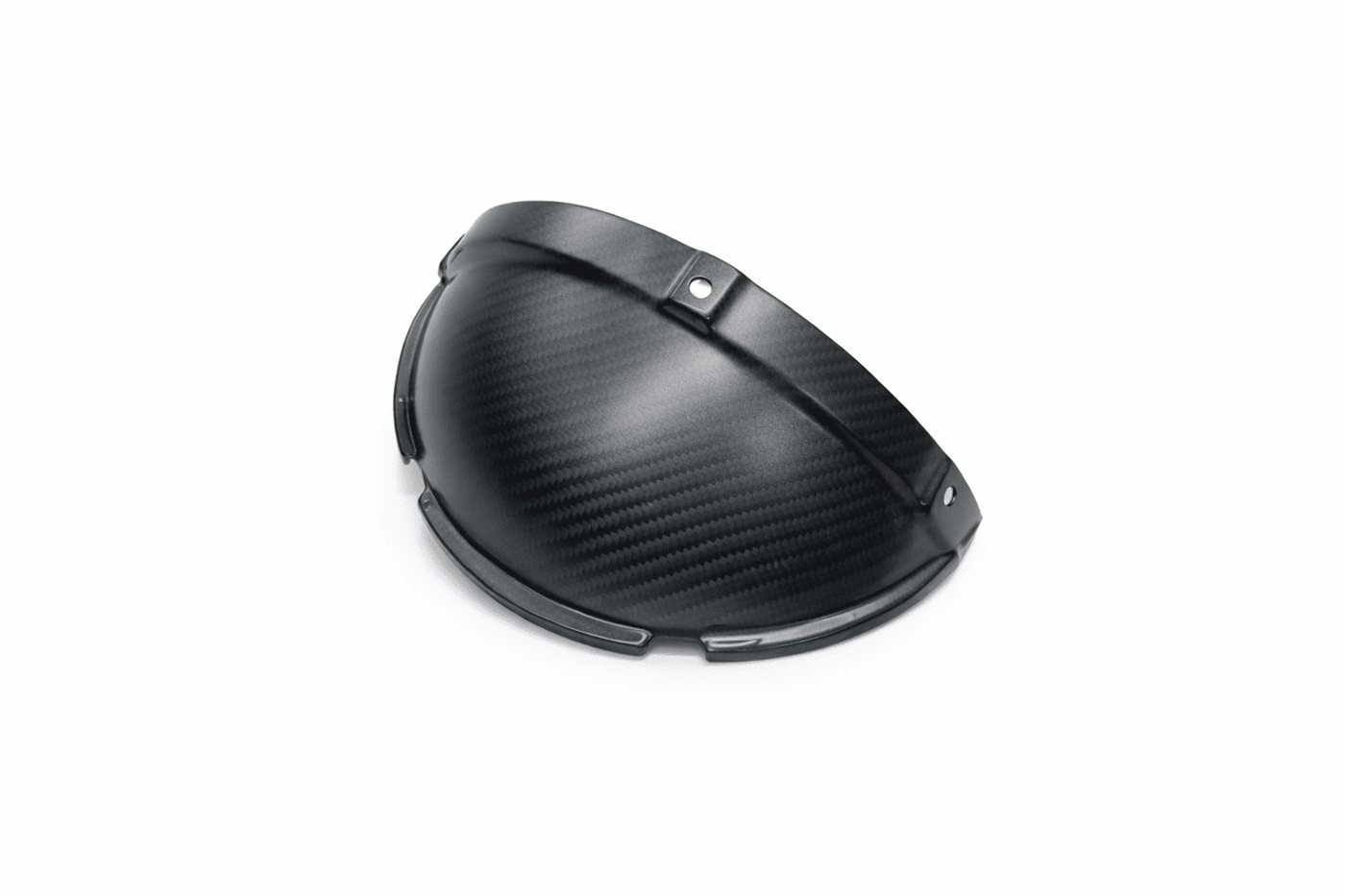
The Fabspeed heater block-off plate on the fan shroud is being replaced with the Stuttgart Classica 964/993 heater block-off for standard fan shrouds. It closes the top of the shroud where the factory heater ducting attached, is laid up in 100% prepreg carbon fiber and autoclave-cured in the USA with a satin finish, and matches the carbon fan shroud, engine lid and interior pieces already on the car.
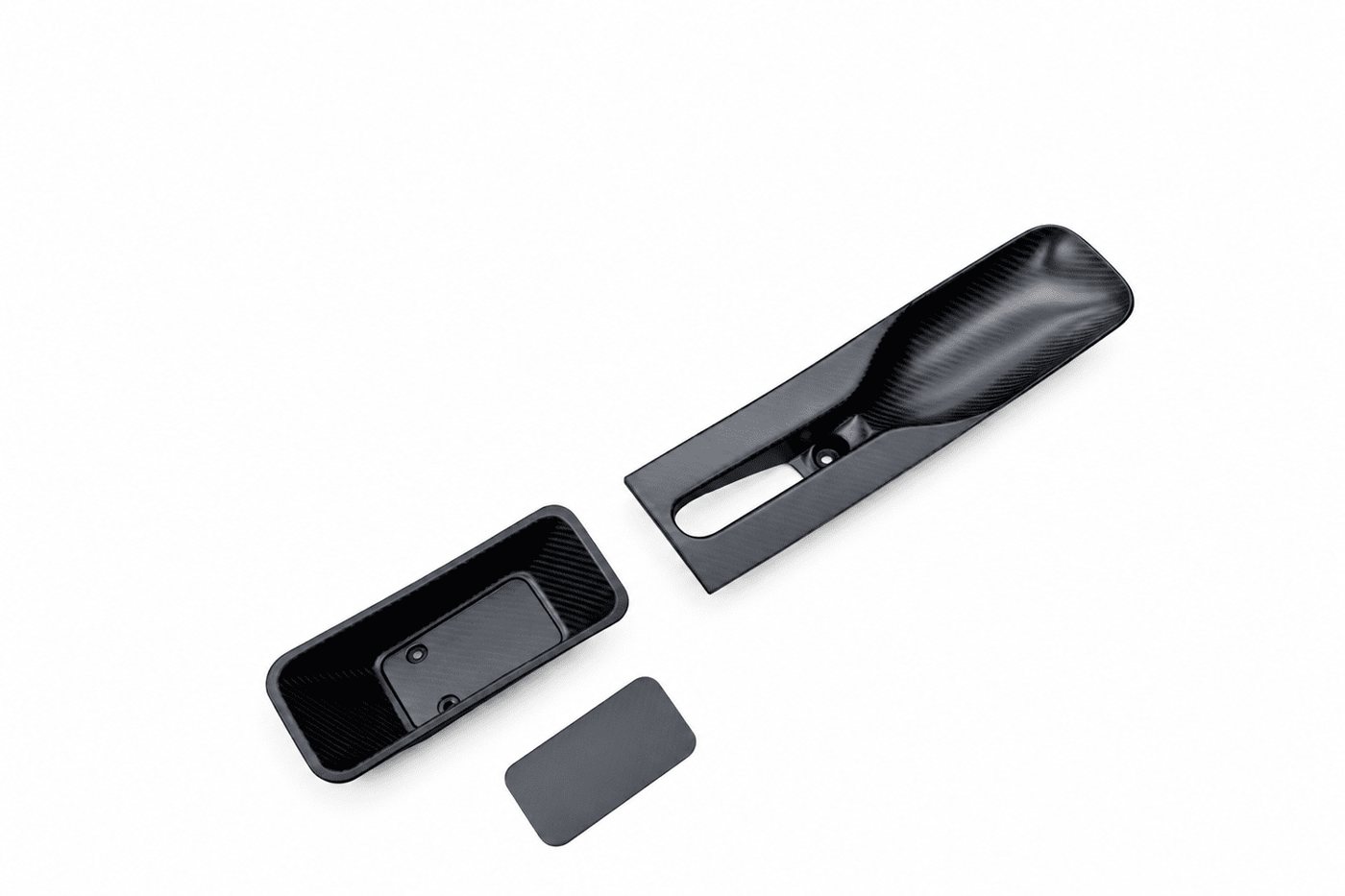
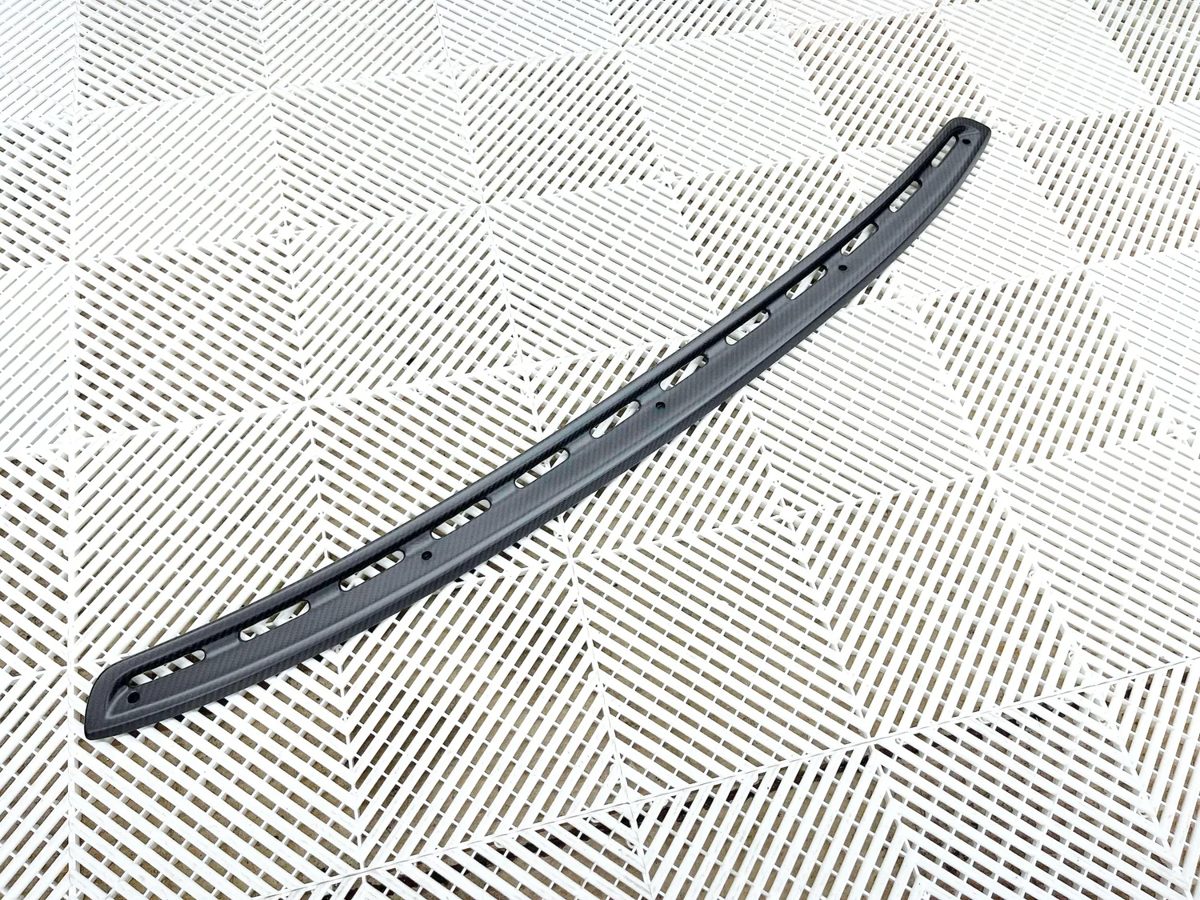
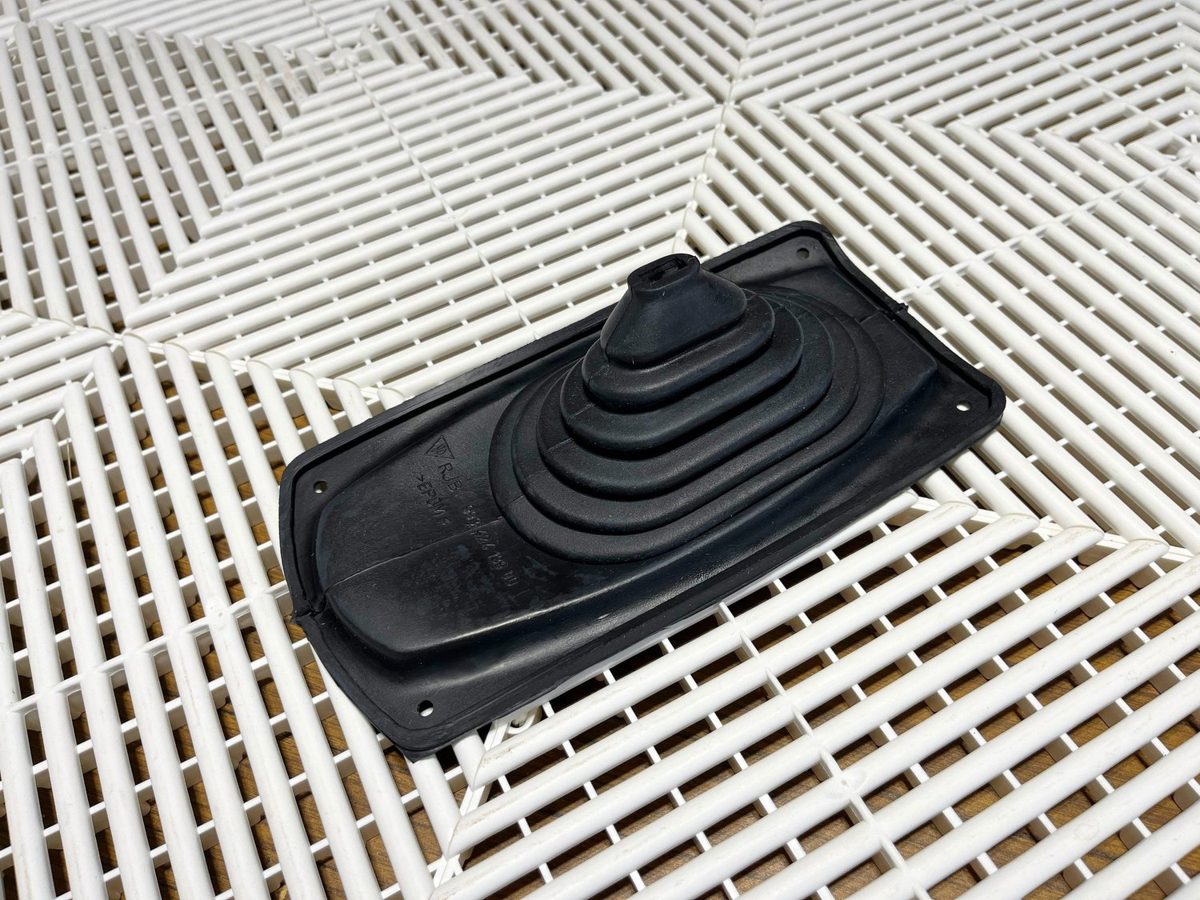
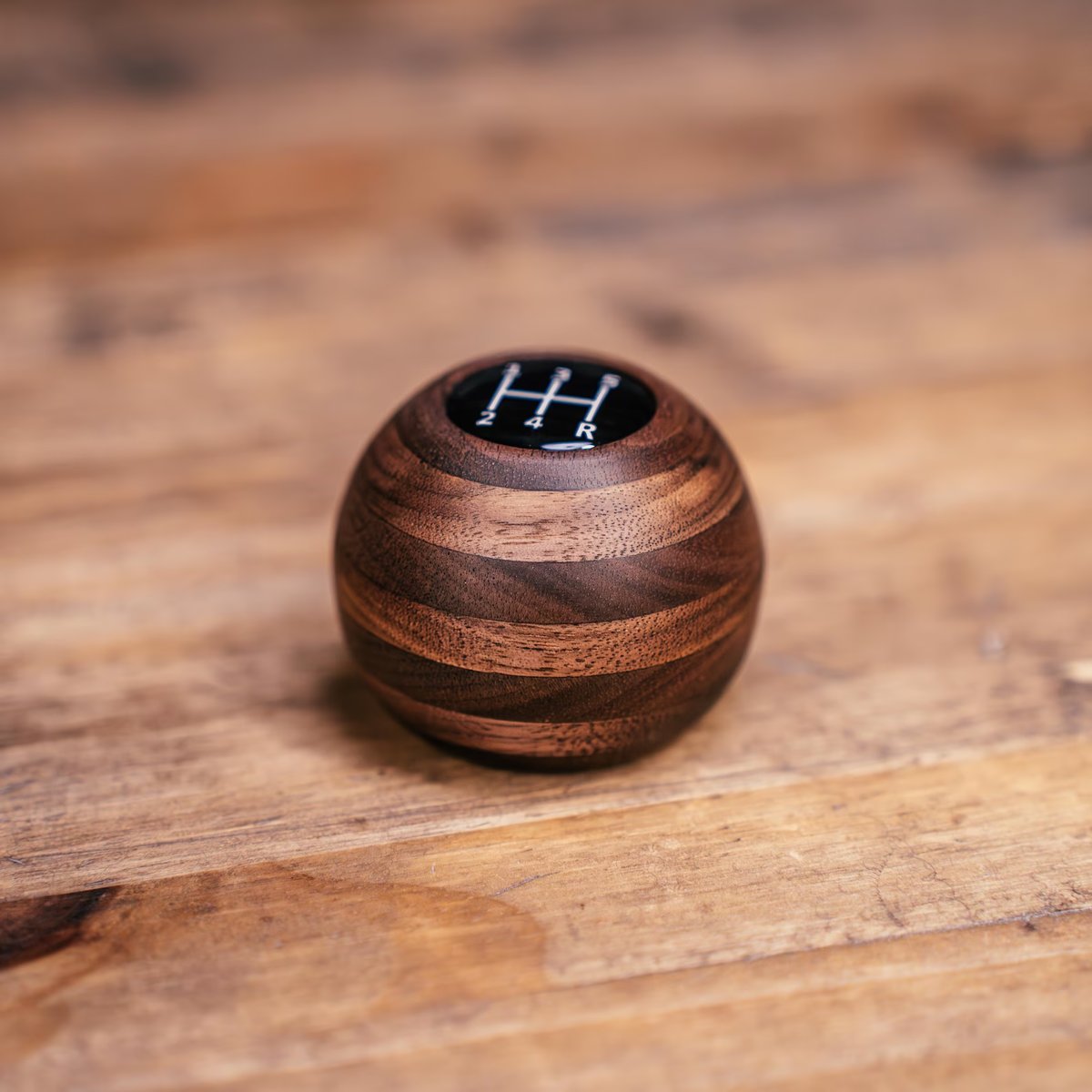
The centre console tray kit is being replaced with the Stuttgart Classica prepreg carbon tray kit: the weave texture of the existing tray is slightly off from the car's other carbon components, and the Stuttgart Classica kit matches the console, dash and engine-bay pieces. The dash vent trim is being replaced with the matching Stuttgart Classica carbon piece. The centre console comes out and is reinstalled, with a replacement shift boot and bellows. A Rodak Garage shift knob for the 964/993 G50 five-speed follows: black walnut, ball shape, black stem, with the 1992 Carrera 2 shift pattern engraved on the top (order #10324, 18 Oct 2026, Rochester NY). A new center gauge face and a factory fuse box cover (964 610 076 01, 964 and 993) go in with it. A Rennline Rev2 three-piece pedal set in rubber grip (A12.2P60) goes in at the same time; it comes with a throttle extension that brings the gas pedal level with the brake for heel-and-toe. A custom pad for the rear tub basin is being made to match the carpet, cut from one yard of Relicate German Square Weave in Natural 326 ordered 27 Oct 2026 (confirmation #5CC8Z600I).
With the mechanical and interior work complete, the car gets a full concours-level detail of the exterior and interior. Minor stone chips on the front bumper and hood are touched up first, colour-matched to the Guards Red, and the paint then goes through a multi-stage compound and polish before a ceramic coating is applied over the whole exterior.